9 June 2026 · 14 min read
The Goodwill Gesture Trap: Why "We'll Revisit That Area" Is Not Client Service
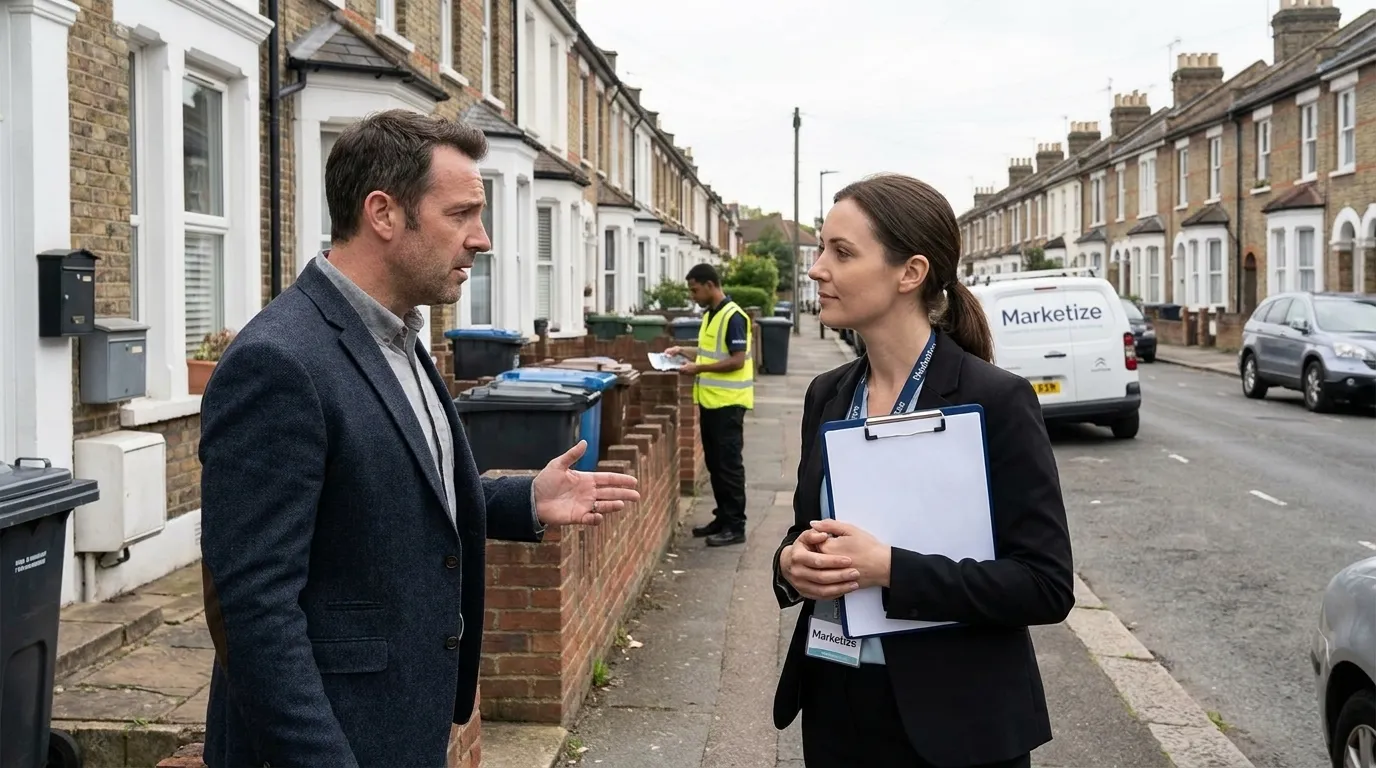
At some point after a disappointing leaflet distribution campaign, you'll probably have a conversation that goes roughly like this.
You raise a concern. A specific postcode that produced nothing. A street a colleague drove down and noticed looked untouched. An area where someone you know didn't receive anything. The distribution company listens, agrees the feedback is worth taking seriously, and makes an offer: they'll go back and cover that area again. No additional charge. They want to make it right.
It sounds like client service. It sounds, if anything, like the kind of response that should make you feel better about the company - that they're responsive, that they care about your satisfaction, that they're the sort of operation that goes the extra mile when something falls short.
But before you accept that framing, it's worth asking a question the company is hoping you won't think to ask.
If they're offering to revisit an area now, why wasn't it properly covered the first time?
This article is the third in the client's guide to not getting burned series. Previously: why distribution companies are confident when things go wrong covered the techniques used to manage complaints, and the completion report article covered the difference between professional-looking reports and reports that hold up under scrutiny. This one focuses on what is arguably the most elegant complaint-management technique in the industry.
What the Goodwill Gesture Actually Represents
The "goodwill gesture" is one of the most reliably effective techniques in the leaflet delivery service industry for managing complaints without resolving them. It works because it is genuinely indistinguishable, on the surface, from the response of a company that cares about its clients. It involves action. It involves commitment. It involves the company absorbing a cost - or appearing to - rather than arguing about liability.
What it doesn't involve is any acknowledgement that the original campaign was deficient.
Here's what this technique actually looks like in operation. A client runs a leaflet campaign across a defined area. The outer portions of that area - the streets that are harder to access, less densely packed, more time-consuming to cover - were delivered to thinly or not at all. The core area was done properly: enough to produce some measurable response, enough that the campaign isn't a visible failure. But the peripheral areas, the ones that would have required additional time and effort to cover fully, were sacrificed.
This isn't accidental under-delivery. In some operations it's structural - the economics of the job were built around not covering the full area. The core gets done. The periphery is quietly written off. The specific fraud and under-delivery tactics that produce this pattern are catalogued in how to prevent dishonest leaflet distributors.
When a client notices the gap and raises a concern, the goodwill gesture achieves something elegant: it covers the area that was always going to need covering, while simultaneously framing that coverage as something generous happening beyond the scope of what was agreed. The original shortfall doesn't get acknowledged. The second delivery doesn't get presented as evidence that the first was incomplete. Instead, it appears in the record as a demonstration of the company's commitment to the relationship.
The complaint - and the client's willingness to raise it - became the mechanism for finally doing the job that should have been done in the first place.
Why It's So Effective
The goodwill gesture works on clients for a reason that says more about good faith than naivety. Most people, when someone offers to fix something, take that offer at face value. The offer itself signals accountability. The action of revisiting the area signals responsiveness. By the time it's done, the relationship feels restored.
This is also, if you step back from it, exactly how you'd expect a genuinely good company to behave when it discovered a mistake. They'd identify the problem, go back and fix it, and try to make the client feel the situation was handled well. The technique works precisely because it mimics legitimate client service so closely.
The difference is in the framing. A company that discovered a genuine operational failure and wanted to put it right would explain what went wrong, explain what they're doing to address it, and treat the second delivery as making the client whole - not as a favour. They would not position the correction as something generous. They would position it as what happened: a job that wasn't fully completed the first time, now being completed.
The goodwill gesture frames the same action entirely differently. It's presented as going above and beyond. It's positioned as the kind of thing they don't have to do but are choosing to do because of how seriously they take the relationship. The underlying admission - that the first delivery was deficient - is never made. In some cases it's actively contradicted: "of course the original campaign was delivered properly, but we want to make sure you feel fully supported."
That distinction matters enormously for a client trying to make sense of what happened to their campaign. A genuine error acknowledged and corrected is information you can use. It tells you what went wrong, whether the company is reliable enough to use again, and what to watch for in a future campaign. An unremedied shortfall repositioned as generous attention to detail tells you none of those things - because it never acknowledged that anything went wrong.
The Second Problem: What the Revisit Covers
There's a practical problem with goodwill gesture revisits that deserves attention separately from the technique itself.
When a door to door leaflet distribution company offers to revisit an area, the area they revisit is typically the area you complained about. Not the full peripheral zone that may have been thinly covered. Not the three additional streets that were missed but that you haven't specifically named. The area you identified through complaint. And only that area.
This is important for a couple of reasons. First, you only know about the gaps you were able to independently discover. The gap a colleague noticed because they drove down the street. The gap an acquaintance mentioned because they live there and didn't receive anything. The postcode that produced zero response when similar postcodes produced some. These are the gaps that are visible to you. The gaps you didn't discover - the parts of the peripheral area you had no independent way of checking - don't get covered by the revisit, because you didn't raise them.
Second, the revisit is highly localised around your specific complaint. It's designed to satisfy the concern you raised, not to comprehensively address delivery shortfalls across the original campaign area. When it's done, you have evidence that those specific streets were covered - and no evidence either way about the rest of the peripheral zone. This is exactly the kind of selective coverage that GPS proof of delivery data is designed to expose. With street-level GPS records from the original campaign, you can see the peripheral zone coverage independently of any specific complaint you happen to have raised - and you can identify gaps you would otherwise have no way of knowing about.
The result is a revisit that closes the complaint you raised while leaving everything else exactly as it was.
How to Tell a Genuine Response From the Technique
There are signals that help distinguish between a company genuinely trying to make something right and one using the revisit to manage a complaint without acknowledging anything.
The first signal is whether they explain what went wrong before offering to fix it. A company with a genuine error to correct will tell you what happened - a distributor had an emergency, a specific street had unexpected access problems that weren't recorded, an area got missed in the scheduling. The explanation might be uncomfortable but it's specific and it's accountable. A company deploying the technique won't offer this explanation, because offering it would acknowledge a failure they're not admitting.
The second signal is how they frame the revisit. "We want to go back and cover this properly because it looks like it wasn't fully done" is a different statement to "we'd like to revisit that area as a gesture of goodwill to show how seriously we take your satisfaction." One acknowledges a problem. The other performs generosity while leaving the underlying question unanswered.
The third signal is whether the revisit covers more than what you complained about. If the company comes back to you and says "we've gone back over the full peripheral zone, not just the specific areas you mentioned, and here's the coverage data for the additional streets" - that's evidence of genuine accountability. If the revisit is scoped precisely and only to what you raised, that's evidence of complaint management.
The fourth signal is whether they offer to show you the original data alongside the revisit data. If the first delivery was done properly, showing you the original GPS records and non-delivery logs alongside the revisit records is easy. If the original data is thin, or doesn't exist in the form it should, that comparison isn't something they'll want you to see. The detailed framework for what street-level GPS data, non-delivery logs, and pace analysis should look like - and how to spot when they're missing - is covered in how to avoid leaflet theft and false delivery claims.
What Genuine Client Service Actually Looks Like
When a leaflet distribution campaign has a genuine delivery problem, a company that operates transparently handles it differently.
They start from the data. They look at the GPS trail for the area in question, the non-delivery log, and the pace analysis for the sections where the complaint is focused. If there's a discrepancy - if the trail shows streets covered but the pace was too fast to be consistent with letterbox delivery, or if specific streets simply don't appear in the trail - they tell the client that. Specifically. With the evidence. For the full analytical framework that turns GPS coverage data into pace-based delivery verification - including how to identify the patterns that indicate selective skipping - how to use GPS tracking for campaign analysis covers every element.
If the shortfall is on them, they cover the area properly and provide verification data for the second delivery that the client can review directly - not a general assurance that it's been done. The client can see the GPS trail for the revisit, see where it overlaps with the original and where it's extending coverage that was missed, and make their own assessment of what was and wasn't done the first time.
That's uncomfortable for the company in the short term. It involves acknowledging something they'd rather not acknowledge. But it produces the only outcome that actually serves the client: accurate information about what happened, and a campaign that is eventually delivered to the specification they paid for.
The goodwill gesture, as a technique, serves the company. It closes the complaint without closing the accountability gap. And clients who accept it as genuine client service tend to repeat the experience - because nothing about the underlying dynamic has been identified or addressed. The compounding harm of this is that it shapes the client's entire understanding of what response rates should look like, what coverage is realistic, and what kind of follow-up to expect. For context on what good leaflet ROI benchmarks actually look like across business types - and how to recalibrate against industry data rather than the framing offered by a company managing complaints - that guide gives you the comparison data.
What to Ask Before You Accept
If you're offered a revisit after raising a concern, the most useful thing you can do is ask two questions before accepting.
First: "Can you show me the GPS coverage data for the original delivery in that area, so I can see what the record shows compared to what I was expecting?" If the original delivery was done properly, this question is easy to answer. The data is there and it's clear. If the original delivery wasn't done properly, this question is harder to answer - and the response to it will tell you something. Real time delivery tracking with offline data storage means this kind of street-level record exists for any campaign that was genuinely delivered through a verification platform. A company without it is a company you should ask about the absence.
Second: "Will you be covering just the specific areas I mentioned, or the full peripheral zone of the original campaign?" The answer tells you whether the revisit is designed to address the complaint or to address the delivery.
A company with nothing to hide will answer both questions directly and point you at the data. A company using the technique will answer with reassurance and confidence and a very generous offer that somehow doesn't quite address what you asked.
Preventing the Trap Before You Need to Spot It
The most reliable way to deal with the goodwill gesture isn't to spot it in the moment - it's to commission a campaign in a way that prevents the dynamic from arising at all. There are three structural decisions that change this:
Use a platform that generates verification data automatically. Street-level GPS records, address-level non-delivery logs, and geotagged photos distributed throughout the route should be system-generated, not assembled afterward by the company doing the work. For a comparison of which leaflet delivery tracking apps and platforms actually produce each of these elements, that guide gives you a structured way to evaluate verification claims before commissioning.
Specify letterbox count cross-referencing in the original campaign. Letterbox counting tools let you set the deliverable household total for your campaign zone at the planning stage - not after the fact. When the agreed quantity is anchored to verified addresses rather than self-reported delivery numbers, the discrepancy between planned and actual coverage becomes much harder to obscure.
Use escrow-based payment from day one. A company that hasn't been paid yet has a different relationship to evidence than one that already has your money. With escrow-linked payment systems, funds release on verified completion rather than on the promise of completion - which means the report has to stand up to scrutiny before payment, not after. This is the structural shift that turns plausible explanations into provable claims.
Each of these is part of the broader technology behind modern leaflet distribution - and together they remove the dynamic that makes the goodwill gesture work. The full integrated framework for commissioning a campaign that doesn't have these gaps is covered in how to plan a successful leaflet campaign.
Gestures Without Acknowledgement Aren't Service
Goodwill gestures aren't always bad practice. A company that has genuinely made an operational error and wants to correct it is doing something right. The problem is when the gesture substitutes for accountability rather than accompanying it - when it's used to close a conversation that was asking the right questions, rather than to answer those questions properly. Knowing the difference is what separates clients who get what they paid for from clients who get a very professional experience of not quite being told what happened to their campaign.
For the broader strategic context on how leaflet distribution in 2026 is being reshaped by GPS verification, escrow payment, and platform-based accountability - and how the dynamics described in this article are gradually disappearing from the better operators in the market - that guide covers the landscape. For the measurement framework that lets you evaluate any campaign's results against industry data rather than against a company's framing, how to measure leaflet campaign performance covers every element.
Ready to commission a campaign that doesn't leave room for goodwill gestures? View campaigns on Marketize - street-level GPS coverage, address-level non-delivery logs, letterbox count cross-referencing, and escrow-based payment release are included as standard. The structural protections come built in - not as something a company offers after a complaint.