6 April 2026 · 16 min read
How to Prevent Dishonest Leaflet Distributors: Technology Solutions That Actually Work
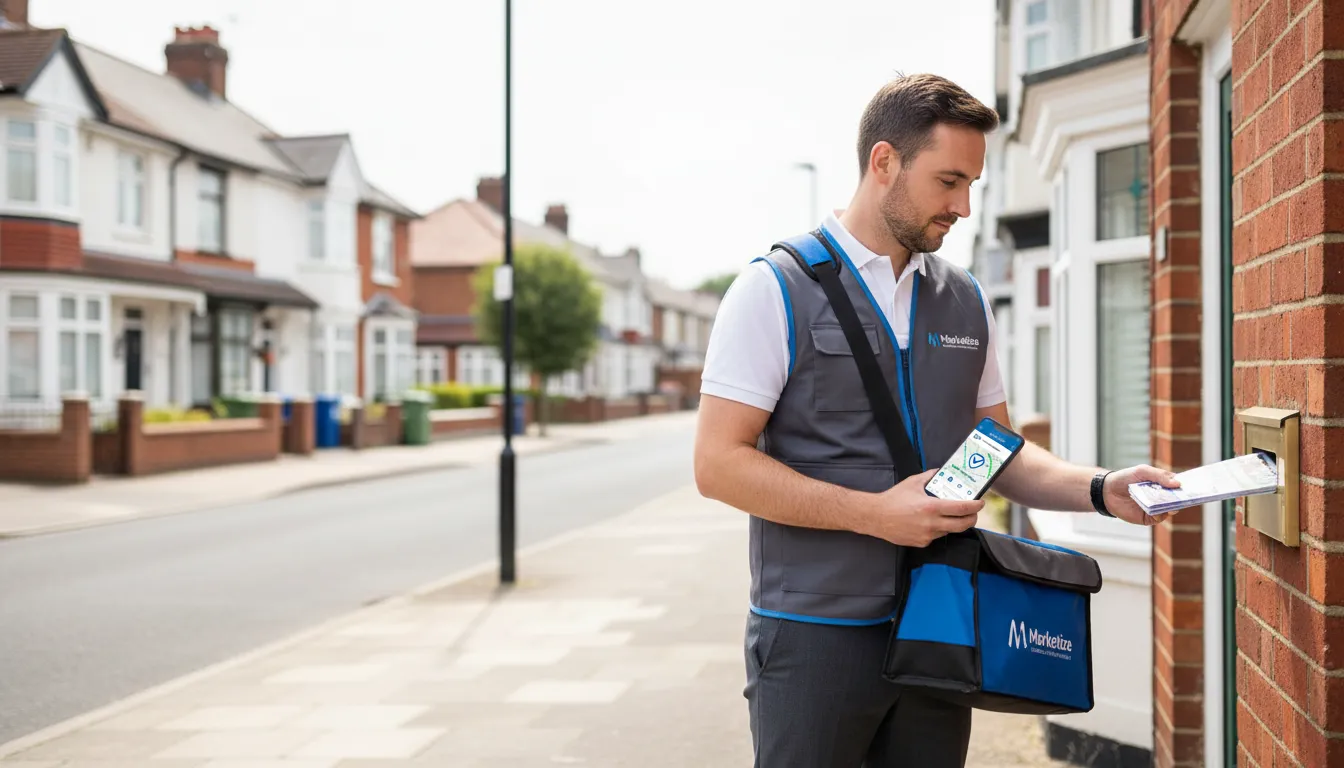
For decades, dishonest leaflet distributors had it easy. Collect leaflets on Monday, dump them in a skip on Tuesday, claim completion by Wednesday, pocket the payment. No proof required, no verification possible, no accountability whatsoever.
The stories are legendary. Five thousand menus found in a single industrial bin. Distributors who'd never even been to the coverage area claiming the job was finished. Leaflets delivered to half the specified streets while charging for complete coverage. Businesses paying £500, £1,000, £2,000 for distribution that either didn't happen or was so incomplete it might as well not have.
The question used to be "How do I prevent dishonest leaflet distributors?" and the honest answer was "You can't, really. Cross your fingers and hope."
That's changed completely. Leaflet distribution tracking technology hasn't just made fraud harder — it's made it basically impossible for anyone using modern platforms. GPS proof of delivery, photo verification, letterbox counting, and payment protection mean dishonest distributors either get caught straight away or steer clear of platforms with proper verification. For a thorough grounding in how leaflet distribution works before examining the fraud problem, that guide covers the full process from booking to completion.
Still getting scammed in 2026? You're either working with people who refuse modern verification (a massive red flag) or you're not reviewing the proof properly. If you're new to the whole area, leaflet distribution fundamentals is the right starting point — it covers what a legitimate campaign looks like end-to-end before any of this technology conversation becomes relevant.
Here's how to prevent dishonest leaflet distributors using technology that exists right now and tactics that actually work.
The Fraud Problem: What Dishonest Distributors Actually Do
Understanding the fraud tactics helps you spot and prevent them.
Complete Non-Delivery (The Bin Job)
The simplest scam: collect your leaflets, drive to the nearest industrial estate, chuck everything in a skip, claim the job's finished. Take payment and move on.
This was shockingly common before GPS proof of delivery became standard. No proof meant no way to verify whether distribution happened at all. Some distributors built entire businesses around this model — collecting multiple jobs per day, dumping them all, and processing payments faster than clients could figure out they'd been scammed.
Partial Delivery
More sophisticated fraudsters deliver to some of your area but skip the difficult or time-consuming bits. They hit the easy residential streets — good letterbox access, no hassle — then ignore flats with entry systems, streets with aggressive dogs, anywhere parking's a nightmare.
They've done maybe 60–70% of the work but claim 100% completion. Charge full price. Without verification, you'd never know which streets got missed.
Selective Skipping
Even sneakier: they walk the complete route but deliberately skip properties that slow them down. Houses with "No Junk Mail" signs beyond the standard 5% allowance. Letterboxes requiring long driveway walks. Properties with gates or barriers.
The GPS trail shows they covered all streets, so basic tracking wouldn't catch this. But they've delivered to maybe 70–80% of properties rather than the 95% you're paying for. This is exactly why advanced route tracking for leaflet delivery — not just a GPS breadcrumb trail — matters. To understand precisely what a complete leaflet distribution tracking system should capture, Marketize's How It Works page breaks down every verification layer.
Speed Rushing
They finish the distribution but do it unrealistically fast by cutting every corner going. Leaflets shoved halfway into letterboxes, dropped on doorsteps, or left in communal hallways rather than delivered to individual flats.
Technically the leaflets went to the area, but the quality is so poor that most will be binned before anyone reads them. You've paid for distribution but got minimal value.
Photo Fraud
They take all required photos in one spot before starting, then upload them claiming they were taken throughout the route. Or they walk the route empty-handed, snap photos at various locations, then never actually deliver anything.
This only works with verification systems that don't check photo geotags and timestamps properly — which is exactly why GPS tracked leaflet delivery with embedded EXIF metadata verification is the standard that actually holds up.
How Technology Prevents Each Type of Fraud
Modern leaflet distribution platforms didn't just tick the verification box. They built entire systems designed to make each fraud tactic impossible. Understanding how leaflet distribution software works reveals why the technical architecture matters — it's not just a GPS app bolted onto an invoicing system.
GPS Tracking Prevents Complete Non-Delivery
Someone collects your leaflets and bins them? GPS proof of delivery shows they never even went to the distribution area. The route map is either blank or shows them driving to an industrial estate and back.
Platforms like Marketize use offline GPS storage that syncs when signal returns, eliminating any excuse about "no signal in that area." The complete route tracking for leaflet delivery trail either shows they covered your specified streets or it doesn't. No ambiguity, no excuses.
Escrow-style payment protection means they don't get paid until GPS proof confirms they actually reached the area and covered the streets you specified. The scam becomes pointless — they'd have to do the work to get payment anyway.
Letterbox Count Verification Catches Partial Delivery
This is where basic GPS tracking becomes sophisticated fraud prevention.
The platform knows how many letterboxes exist on every street in your coverage area. When the distributor's GPS trail uploads, the system calculates which streets they actually walked and how many letterboxes are on those streets.
Paid for 5,000 leaflets but their route only covered streets with 3,500 letterboxes? The maths exposes the problem before payment releases. Not sure how many leaflets you should be ordering for your area in the first place? How Many Leaflets Do I Need? gives you a practical formula based on street density and campaign goals — so you go into verification knowing the right baseline.
They either complete the missing coverage or get paid proportionally for work actually done. Platforms with this capability make partial delivery unprofitable. The verification catches it automatically.
Photo Distribution Analysis Reveals Selective Skipping
Geotagged photos taken at regular intervals during distribution — appearing as clickable pins on the GPS map — provide leaflet distribution proof that the distributor actually carried leaflets the entire route instead of walking around empty-handed.
But photo analysis goes deeper. Are photos spread evenly across the route, or clustered in easy areas? Do timestamps show consistent intervals suggesting photos taken during actual distribution, or suspicious clusters indicating batch photography?
Computer vision systems — now emerging and likely to become standard within the next few years — will analyse photos automatically. This sits at the leading edge of the future of tech in leaflet distribution, where AI-driven verification will make selective skipping even harder to conceal than it already is.
Timing Analysis Flags Speed Rushing
Route tracking for leaflet delivery records exactly how long the distributor spent in each section of the route. Cross-reference that against letterbox density and you've got their average delivery speed.
Industry benchmarks: 150–200 letterboxes per hour in high-density urban areas, 100–150 in suburban, 50–100 in rural. If someone claims to have delivered 5,000 leaflets in three hours when the area should take six to eight hours, they've either skipped properties or rushed through so fast the quality will be terrible.
Platforms flag unrealistic completion times automatically. Combined with photo evidence, you can verify whether they actually did thorough work or just cut every corner.
EXIF Metadata Prevents Photo Fraud
When smartphones take photos, they bake GPS coordinates and timestamps directly into the image file's EXIF metadata. Faking this data convincingly? Nearly impossible.
Proper verification systems extract and check this metadata automatically. Photos uploaded from a camera roll taken days earlier? The timestamps expose that immediately. Photos claiming to be from different locations but with identical GPS coordinates? Caught. Photos taken all within five minutes but supposedly spanning four hours of distribution? Flagged. For a full explanation of exactly what valid GPS proof of delivery looks like — and how EXIF data creates an unfakeable audit trail — the dedicated guide covers every element.
Red Flags When Choosing Distributors
Some warning signs appear before you even hire someone. Pay attention to these.
They Resist GPS Tracking
Any distributor who refuses GPS proof of delivery or makes excuses about why they can't provide it is waving a giant red flag. The technology costs them nothing — smartphones have GPS built in, apps like Marketize are free to distributors, data usage is negligible. There's no legitimate technical or financial reason to refuse.
If they refuse, it's because they don't want accountability. Walk away immediately.
They Want Payment Outside the Platform
Platforms with escrow-style payment protection hold funds until completion gets verified. This protects both parties but also stops distributors getting paid for work they didn't actually do.
Distributors suggesting you pay them directly via bank transfer or cash "to avoid platform fees"? They're trying to bypass verification and payment protection. Either they're planning to scam you, or they habitually do poor work and know verification would expose it.
Their Prices Are Suspiciously Low
Everyone else quotes £60–80 per thousand for solus urban distribution. Someone offers £35. Ask yourself why. For a reliable benchmark of what leaflet distribution costs across the UK in 2026 — broken down by campaign size, area type, and service level — the prices guide gives you the numbers to spot outliers instantly.
Sometimes they're new and building a client base. More often it's because they cut corners, do poor quality work, or don't actually complete jobs fully. Extremely low prices plus resistance to GPS tracking? That's a neon sign flashing "you're about to get scammed."
No Reviews or Track Record
Established platforms show distributor ratings, completion history, and reviews from previous clients. Someone with 50 completed jobs and a 4.8-star average? Far more reliable than someone with zero history. If you're looking to find trusted leaflet distributors in your area, Marketize's marketplace lists every distributor alongside their verified GPS-tracked completion history — so you're choosing based on evidence, not sales patter.
Poor Communication or Evasive Answers
Ask specific questions. How does their GPS tracking system work? How do they handle photos? What happens if weather delays distribution? How do they deal with inaccessible properties?
Honest distributors answer directly and specifically. Dishonest ones give vague non-answers or change the subject. If getting straight answers feels like pulling teeth, find someone else.
What Proper Verification Looks Like
Working with legitimate distributors through proper platforms? Here's what you should see. This reflects the standard set by technology in leaflet distribution today — not premium add-ons, but baseline expectations on any credible platform.
Before Distribution
- Clear job posting with your coverage area drawn on a map
- Accurate letterbox count for the area (not guesswork)
- Agreed timeline and pricing
- Payment held in escrow-style protection
During Distribution
- Live GPS showing current location — you can watch in real time, or simply know the route tracking for leaflet delivery data is being captured for your post-completion review
- Photos uploading throughout the route, appearing as pins on the GPS map
- Ability to message the distributor if you spot problems
After Distribution
- Complete GPS trail covering all specified streets — the core of your leaflet distribution proof
- Geotagged, timestamped photos spread evenly across the route
- Timing that matches expected completion duration for the quantity and area
- Letterbox count verification confirming route coverage matches what was claimed
- Documentation archived permanently for your records
Payment Release
- You review all evidence (usually within 24–48 hours)
- Either confirm completion (payment releases to distributor) or raise concerns
- Platform steps in as neutral third party if there's a dispute
- You don't pay until you're satisfied
This is standard on platforms like Marketize. For the complete picture of how every step works — from drawing your coverage area to releasing payment — how leaflet distribution works walks through the full process with no steps skipped.
How to Challenge a Distributor When Proof Doesn't Add Up
Sometimes the verification data tells a story that needs explaining.
Raise Specific, Evidence-Based Concerns
Vague complaints go nowhere. Specific data is hard to argue with:
"Photo timestamps show 45 images all taken between 2:15pm and 2:22pm, but the job supposedly took six hours. This suggests batch photography rather than photos taken during actual distribution."
"The route covered streets containing approximately 3,400 letterboxes according to the platform's count, but we paid for 5,000 leaflets. Where did the other 1,600 go?"
Specific, evidence-based concerns are harder to dismiss than vague dissatisfaction.
Use the Platform's Dispute Resolution
Platforms with proper leaflet distribution tracking systems — like Marketize — step in as neutral third party. They review GPS data and whether it matches job specifications, photo geotags and timestamps, communication logs between you and the distributor, expected timing versus actual timing, and letterbox counts versus claimed delivery.
Based on that evidence, they decide whether completion was satisfactory, partial, or inadequate. Payment releases fully, partially, or gets refunded accordingly.
This beats arguing directly with the distributor — which usually devolves into your word against theirs.
If You Paid Outside a Platform
Your options are limited. You have no escrow protection, no independent arbitration, and possibly no proper proof at all.
You can threaten small claims court if the amount justifies it (usually not worth it under £500). You can leave negative reviews on whatever platform you found them through. You can warn other businesses in your area.
Mostly, you learn an expensive lesson about why payment protection matters. This is exactly why dishonest distributors want you paying them directly — they know verification and escrow systems would expose them.
Why This Problem Is Largely Solved Now
The dishonest distributor problem hasn't vanished completely. But it's mostly contained to businesses that either work with distributors who refuse modern verification, use platforms without proper GPS proof of delivery, photo verification, letterbox counting, and payment protection — or don't review verification properly before confirming completion.
Use platforms with comprehensive verification. Actually check the proof before paying. Getting scammed by dishonest distributors becomes nearly impossible.
The technology makes fraud unprofitable. Distributors would have to:
- Walk the complete route to generate valid GPS trails (doing the work)
- Take photos throughout to create proper verification (doing the work)
- Complete in realistic timeframes to avoid flags (doing the work)
- Cover enough letterboxes to match claimed quantity (doing the work)
At which point they've done the work anyway, so scamming becomes pointless.
The dishonest distributors who remain either prey on businesses that don't require verification, or they've left the industry because the economics no longer work. And where is all this heading? The future of tech in leaflet distribution points toward AI-powered verification, automated anomaly detection, and real-time quality scoring — making the already-difficult job of fraud even less viable.
Honest distributors benefit enormously. Their verified track records — visible through platform ratings and completion history — differentiate them from fraudsters and justify fair pricing. Payment protection means they don't chase unpaid invoices. If you're considering becoming a distributor yourself, becoming a leaflet distributor in 2026 covers the whole process: how to get set up, what equipment you need, and how platforms like Marketize ensure you get paid promptly for every completed job.
This shift also explains why leaflet distribution in 2026 still delivers measurable ROI despite the growth of digital channels — the accountability problem that always muddied attribution has been solved. When you know distribution happened exactly as specified, you can actually measure it.
Running Your Campaigns on Verified Platforms
The practical step is straightforward. Use a platform that enforces the verification standards described above. Marketize campaigns give you map-based coverage drawing, instant letterbox counts, demographic targeting by income and property type, escrow payment protection, and complete leaflet distribution tracking from start to finish — all in one place.
Before placing your first campaign, it's worth understanding the full range of leaflet distribution services available on the platform. Not every campaign needs the same approach — solus distribution, shared drops, targeted demographic runs, and multi-area rollouts all have different cost profiles and verification requirements.
On the cost side, the UK leaflet distribution prices guide for 2026 gives you reliable benchmarks so you know what legitimate campaigns should cost at every scale — which also means you'll instantly recognise when a quote is suspiciously cheap. Understanding how many leaflets you actually need for your target area prevents over-ordering and ensures letterbox count verification has the right baseline to work from.
For businesses comparing platforms before committing, the best leaflet delivery tracking apps gives an honest side-by-side breakdown of what each platform actually offers — GPS quality, photo verification, letterbox counting, payment protection, and dispute resolution all compared in plain language.
A Note on Distributor-Side Accountability
Everything above is written from the client's perspective. But the accountability technology benefits distributors just as much. Before verified platforms existed, an honest distributor could complete every job perfectly and still face non-payment from a client who simply denied the work was done.
GPS trails, timestamped photos, and letterbox verification are the honest distributor's defence as much as the client's tool. And with platforms providing all tracking tools free, there's no cost barrier to adopting them. Whether you're looking for leaflet distribution jobs near you, exploring student leaflet distribution jobs in 2026, or considering leaflet distribution jobs for over 60s as a flexible income option — the verified platform model means you get paid for the work you actually do, with data to back it up.
The Answer Is Now Clear
The question "How do I prevent dishonest leaflet distributors?" now has a direct answer: use leaflet distribution tracking technology properly and work through platforms that enforce it.
GPS proof of delivery with offline storage, geotagged photos with EXIF verification, letterbox count cross-referencing, escrow payment protection, and neutral dispute resolution aren't futuristic concepts — they're standard practice available right now.
For detailed guides on reviewing GPS data and photo verification properly, Marketize's website offers resources built from 44 years of industry experience. The technology behind leaflet distribution is there, tested, and working. The fraudsters are exposed. The choice is whether you use the protection available or leave yourself vulnerable to problems that are entirely preventable.