2 April 2026 · 13 min read
The Future of Tech in Leaflet Distribution: What's Coming and What's Hype
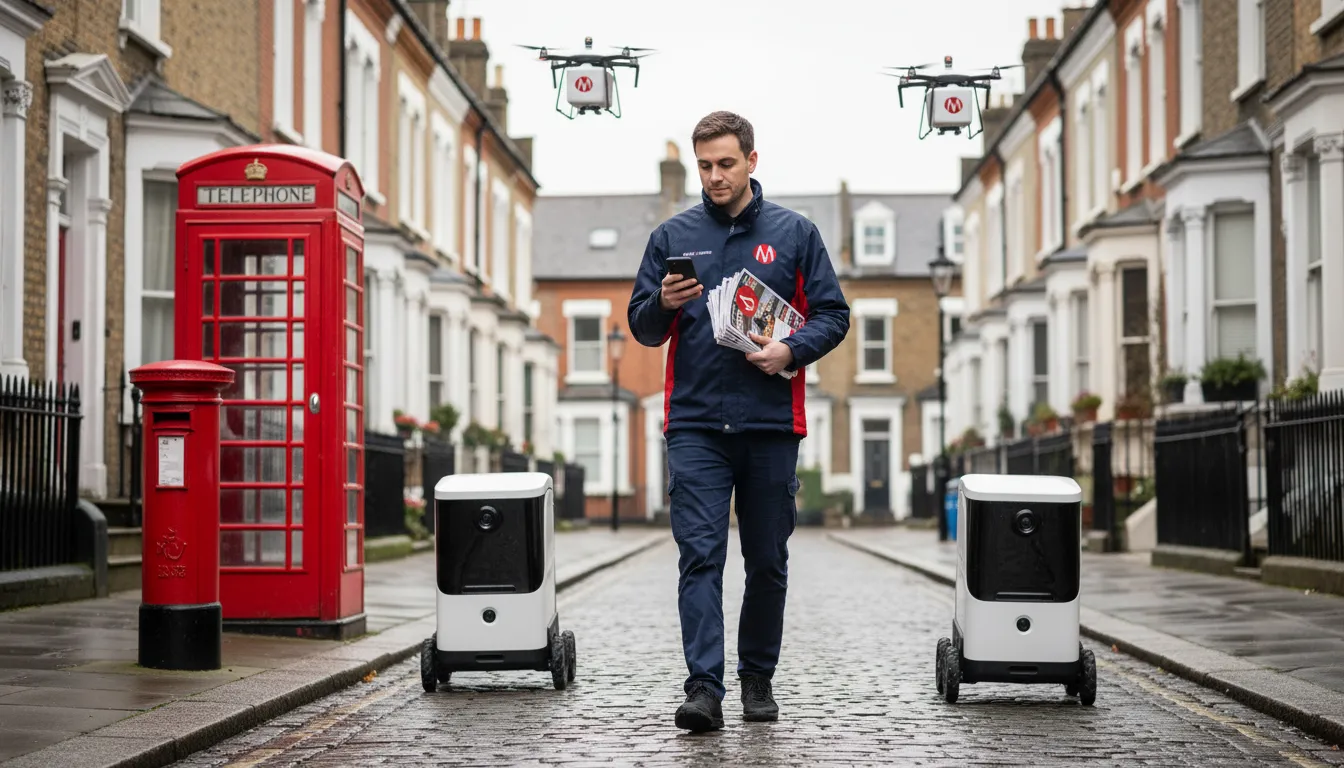
Ten years ago, GPS tracking leaflet distribution didn't exist. Five years ago, it was novel. Now it's standard. The businesses that adapted early got better results at lower risk. The ones that waited are catching up.
So what's next? Where is technology taking leaflet distribution over the next five to ten years, and what should businesses actually care about versus what's just marketing noise?
This isn't science fiction. The future of leaflet distribution won't involve drones delivering your takeaway menus or holograms jumping off your gym flyers. It'll be smarter targeting, better verification, tighter integration with your other marketing channels, and data that actually helps you make decisions rather than just sitting in spreadsheets.
Platforms like Marketize provide offline GPS storage, geotagged photos appearing as pins on route maps, letterbox counting tools, demographic targeting, and escrow-style payment protection. This is current technology, not future tech.
Some of this tech is already here. Some is a couple of years out. And some of it — despite the noise — probably won't arrive the way people are describing it. Here's what's actually realistic, what's genuinely coming, and what it means for how leaflet campaigns will work.
Where We Are Now: The Baseline
Before looking ahead, it helps to understand where things stand today. GPS tracking and photo verification changed leaflet distribution fundamentally — from an industry built on trust to one built on evidence.
The problem isn't that these tools don't exist—it's that many businesses still aren't using them properly. They require GPS tracking but don't review the data. They get demographic overlays but don't filter their targeting. They have proof of delivery but confirm completion without checking whether route coverage matches letterbox counts.
The next wave of technology won't just provide more data. It'll make that data easier to act on, automate decisions that currently require manual analysis, and connect leaflet distribution to the rest of your marketing ecosystem in ways that are currently clunky or impossible.
AI and Machine Learning: Smarter Targeting Without the Guesswork
AI in leaflet distribution sounds like buzzword territory. Some of it is. But the practical applications are already starting to appear.
Predictive Response Modeling
Right now, demographic targeting lets you filter by income, age, property type, and family composition. You pick the factors that matter and draw your boundaries on a map manually.
AI-powered systems will analyze your past campaign data—which areas responded, which didn't, which demographic combinations produced the best ROI—and predict which new areas are most likely to respond to your next campaign. Instead of guessing whether to target affluent suburbs or middle-income terraced streets, the algorithm shows you: "Based on 12 previous campaigns, these postcodes have an 87% probability of producing above-average response."
This already exists in digital advertising. Google and Facebook use machine learning to optimize ad targeting continuously. Applying similar logic to physical leaflet distribution is the natural evolution.
Dynamic Area Optimization
Early versions of this are appearing now. You run a campaign to 10,000 homes across five different areas. The system tracks which areas produced the best response rates (using QR codes, unique phone numbers, or promo codes). When you plan your next campaign, it automatically weights distribution toward high-performing areas and away from low performers.
More sophisticated versions will adjust targeting mid-campaign. Distribute 2,000 leaflets to Area A as a test.You see exactly which postcodes are generating customers, what the conversion timeline looks like, and how leaflet-sourced customers compare to those from other channels.
If response rates clear the benchmark within 48 hours, the system suggests pushing more volume into that area. If they don't, it flags the underperformance and recommends reallocating budget before the full run is complete. That kind of feedback loop requires distribution platforms and response tracking to talk to each other — which is exactly where things are heading.
Integration: Connecting Leaflet Distribution to Everything Else
At the moment, leaflet distribution mostly runs in its own lane. You plan the campaign, verify delivery through GPS and photos, and then track responses manually — call logs, QR scans, promo codes. The data sits in separate places and someone has to pull it together. That's starting to change.
CRM and Attribution Platforms
Picture your leaflet distribution platform feeding directly into your CRM. A customer rings your restaurant, mentions the discount code from your leaflet, and that conversion is automatically logged against the specific area and the timing of the drop.
Platforms like Marketize already provide campaign dashboards and client communication hubs. You click through images checking that leaflets appear in photos and locations look legitimate.
The next step is API connections to the CRM systems businesses already use — HubSpot, Salesforce, Zoho — so data moves automatically rather than sitting in exports nobody has time to analyse.
Cross-Channel Campaign Management
Most businesses are already running Facebook ads, Google search, email, and leaflet distribution simultaneously. Each one lives in its own platform with its own reporting. Comparing them means a lot of manual work. The direction of travel is integration. Time your leaflet drop to land alongside a digital campaign hitting the same postcodes. See whether combined offline and online exposure outperforms either channel on its own. Shift budget toward whatever is working best for a specific goal. Leaflet platforms won't become full marketing suites. But they will connect properly to the ones you're already using.
Enhanced Verification: Beyond GPS and Photos
GPS tracking and geotagged photos already set a solid verification baseline. But the technology keeps moving.
Computer Vision and Image Analysis
Right now, photo verification means a human clicking through images.
Computer vision algorithms can automate much of this. The system analyzes each photo automatically: Is there a leaflet visible? Does the image show a letterbox or street scene? Do the GPS coordinates embedded in the photo match the location shown in the image? Are photos suspiciously similar, suggesting they were taken in the same spot rather than throughout the route?
This technology exists now in other industries—insurance companies use it to assess damage claims, security systems use it for facial recognition, e-commerce platforms use it for visual search. System alerts the client. GPS shows long periods of stationary positioning? Flagged. Route deviating significantly from planned coverage? Notification sent.
Applying the same logic to leaflet distribution verification is entirely feasible. It's probably 2–3 years away from being standard.
Real-Time Anomaly Detection
Instead of reviewing GPS data after a job is done, algorithms will monitor routes as they happen and flag problems as they occur. Distributor moving faster than any walking pace should allow? This allows intervention during distribution rather than discovering problems after the fact. A quick message to the distributor—"We've noticed your GPS shows you've been stationary for 45 minutes. Is everything okay?"—can resolve issues before they become disputes.
Blockchain for Immutable Records
This one comes up a lot. It's probably the most overhyped technology in the leaflet distribution conversation. The pitch is that GPS data and photos get written to a blockchain — creating a permanent, tamper-proof audit trail that nobody can alter after the fact. Not the distributor, not the client, not the platform.
The reality: Current systems already provide effectively tamper-proof records. GPS data and photos are timestamped and stored on servers the distributor can't access. Blockchain adds theoretical security but doesn't solve problems that current systems haven't already addressed pretty effectively. It might show up anyway — "blockchain-verified delivery" is a phrase that sounds impressive in a pitch deck. But the practical difference compared to what platforms like Marketize already provide is minimal.
Automated Route Optimization: Less Planning, Better Coverage
Route planning right now is largely manual. You draw an area on a map, check the letterbox counts, assign it to a distributor, and trust they'll find a sensible path through the streets.
Algorithm-Generated Routes
Route optimization has been standard in logistics for years — delivery companies use it constantly to cut driving time and fuel costs. Applying the same thinking to walking routes for leaflet distribution is a natural progression. You define your target area. The algorithm maps the most efficient route covering every street, factoring in:
- Letterbox density (heavier coverage where it's worth the time)
- Geographic layout (cutting out unnecessary backtracking)
- Terrain and accessibility (flagging routes with difficult access or steep terrain)
- Time of day (relevant factors like school traffic if timing matters) The distributor gets turn-by-turn guidance through the app. Complete coverage, less wasted time. It helps with verification too. If the distributor follows the optimized route, the completion time should be broadly predictable. Big deviations from that suggest either an inefficient path or gaps in coverage.
Dynamic Adjustment Based on Conditions
More capable versions will update routes on the fly as conditions change.
Road closure detected through traffic data? Route automatically adjusts. Weather turns severe? Response tracking showing which areas converted. Demographic overlays showing household characteristics. But extracting actionable insights requires significant manual analysis.
The system suggests pausing and picking back up when conditions improve. Streets that consistently log high undeliverable rates because of "No Junk Mail" signs? They get flagged, de-prioritised, or removed from future routes automatically. Building this properly means connecting to external data — traffic systems, weather services, historical delivery records. Platforms are starting to work on exactly that.
Better Data, Faster Decisions: Analytics That Actually Help
Leaflet distribution generates a lot of data. The problem is that most businesses don't have the time or tools to do much with it. GPS trails show where distribution happened.
Automated Insight Generation
Future platforms won't just hand you data — they'll tell you what it means. Rather than a table of response rates by postcode, the system surfaces: "Response rates were 3.2x higher in postcodes with median income £40k–£60k compared to £20k–£40k. Consider targeting similar income brackets next time." Rather than leaving you to compare distributor performance manually, it flags: "Distributor A completed the last three campaigns 15% faster than average and scored higher on photo verification. Worth prioritising for time-sensitive jobs." Rather than forcing you to calculate ROI across multiple campaigns yourself, it tells you: "Your average cost per customer acquisition through leaflet distribution is £8.20 versus £12.40 through Facebook ads. Leaflet-sourced customers also show 23% higher lifetime value." It's pattern recognition and automation — taking analysis that currently requires manual effort and doing it faster and more consistently.
Predictive Campaign Modeling
Before committing to a campaign, you'll be able to model expected outcomes from historical data. Planning a 10,000-leaflet drop into a new area? The system looks at demographic similarity to previous campaigns, seasonal patterns, and historical response rates. It comes back with: "Expected response rate 1.8–2.4%, estimated 180–240 conversions, projected ROI 320–410%." Adjust the variables — different area, higher quantity, solus instead of shared — and the predictions update. Campaign planning shifts from gut feel to hypothesis testing.
What's Probably Hype: Tech That Sounds Good But Won't Materialize
Not everything being talked about will actually arrive — at least not in the form people are picturing.
Drone Delivery for Leaflets
Drones delivering parcels makes sense. High-value items justify the operational cost. Drones delivering leaflets to individual letterboxes is a different calculation entirely.
The economics don't work. Drones are expensive to operate, heavily regulated in the UK, and can't realistically deliver to enough letterboxes per hour to compete with human distributors walking routes.
Someone will probably run a trial campaign using drones for PR purposes. It won't become standard practice.
Fully Automated Distribution with Robots
Same problem, different machine. Yes, robots capable of navigating streets and posting leaflets could be built. The cost per delivery compared to a human distributor walking a route would make the numbers completely unworkable. Automation earns its place when it's cheaper than people, or when it does something people genuinely can't. For leaflet distribution, neither condition holds.
AR-Enhanced Leaflets That Magically Engage Everyone
Augmented reality leaflets—where scanning the leaflet with a phone app shows 3D content or interactive experiences—get mentioned periodically.
The problem isn't technology. AR apps exist. The problem is adoption. Most people won't download an app just to scan a leaflet, no matter how clever the AR experience.
Use platforms that provide GPS tracking with offline storage, geotagged photos, and letterbox count verification. Review the data properly before confirming completion. This is table stakes, not cutting-edge.
AR could work for very specific, high-value campaigns — luxury property developments, premium automotive — where the audience is small and already comfortable with the technology. It won't become standard practice for takeaway menus or gym membership drives.
How Businesses Should Prepare
There's no need to wait for future technology before improving your campaigns. Most businesses still aren't using what already exists properly. Start with proper verification now.
Track responses systematically. Use QR codes, unique phone numbers, or promo codes so you know which areas produce results. Future AI-powered optimization requires historical data to learn from. Start collecting it now.
Test and document everything. Run small tests in different areas. Try solus versus shared distribution. Experiment with different offers. Track what works. The more data you generate, the better positioned you'll be when predictive algorithms arrive.
Choose platforms that invest in development. Platforms like Marketize—built by people with 44 years of industry experience who actively develop new features—are more likely to integrate emerging technology than static systems or companies treating distribution as a legacy business.
Don't chase every new feature immediately. When new tech emerges, let others test it first.Adopt it once it's proven, not while it's still being figured out. Being an early adopter sounds appealing. In practice it often means spending time and money on software that isn't finished yet.
The Realistic Timeline
A rough guide to when these technologies are likely to become standard rather than experimental:
Already happening: Enhanced GPS tracking, photo verification, demographic targeting, letterbox counting, payment protection
1–2 years: Basic AI-powered area recommendations, automated anomaly detection, better CRM integration, computer vision for photo verification
3–5 years: Sophisticated predictive modelling, automated route optimisation, cross-channel campaign integration, real-time performance adjustment
5–10 years: Fully integrated marketing ecosystems where leaflet distribution is one connected channel among many, with unified data and automated optimisation across the board
Probably never: Widespread drone delivery, robot distributors, AR-enhanced leaflets as a standard format
The future of leaflet distribution isn't about replacing it with something unrecognisable. It's about making the existing process sharper — better verified, better targeted, better connected to everything else you're running. The technology driving this change is less dramatic than drones and robots. But it's far more useful. It takes data you're already generating and makes it easier to act on. It connects systems that currently sit in silos. It handles analysis that currently lives in spreadsheets nobody has time to maintain.
Businesses that adapt as these tools come through — starting with proper use of current verification technology and consistent response tracking — will see steady, compounding improvements in campaign performance. Those that wait for competitive pressure to force their hand will spend a long time closing gaps that could have been advantages. Marketize's website carries detailed guides on using current leaflet distribution technology effectively, built from decades of hands-on industry experience.The future is coming. Start preparing now with what already exists.