29 January 2026 · 4 min read
Is Leaflet Distribution Effective in 2026?
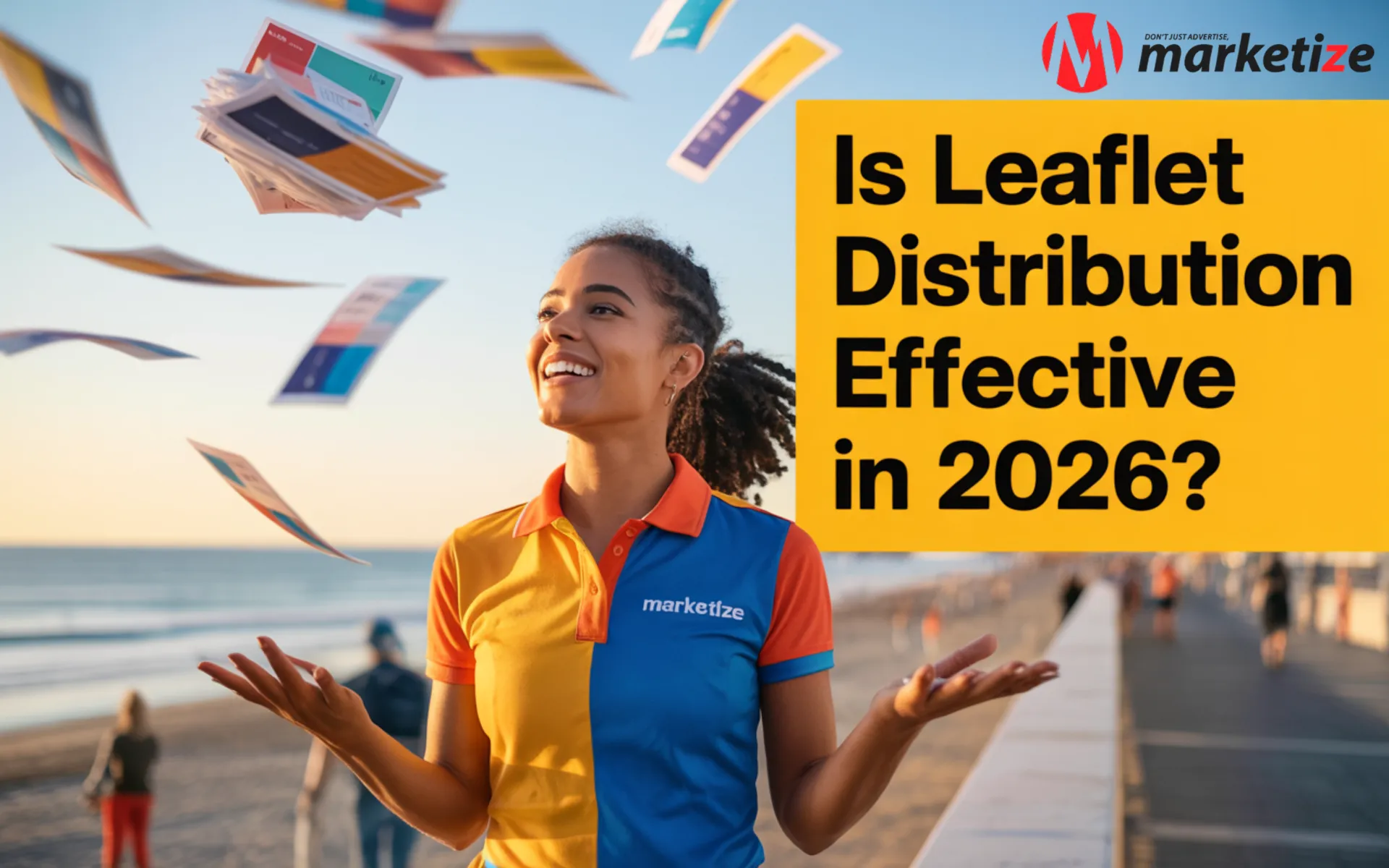
In an age where modern civilisation expands at breakneck speed and our digital interconnectedness grows deeper by the day, it is fair to wonder:
What could a marketing method from "yesterday"-like leaflet distribution-possibly offer contemporary businesses today?
Yet beneath society's increasing reliance on the digital world, there is also a quiet pushback, namely, a rediscovery of the comfort, familiarity, and trust of the physical. People are beginning to recognise that the online world, with all its efficiency, can also bring disconnection, isolation, and overwhelm.
It is within this space that leaflet distribution continues to hold a meaningful place. Not because it is nostalgic, but because it remains tangible, persistent, and impossible to casually swipe away.
Why Physical Media Still Works
A digital advert can be ignored with a swipe or a tap, disappearing completely from the viewer's consciousness.
A leaflet, however, is stubborn, it persists.
It will sit on a table, a windowsill, or a fridge for days at a time; often long enough for the recipient to actually notice it, read it, and engage with it in a moment of quiet decision-making, often repeatedly stumbling upon it until it is finally thrown away.
In France, as told by some of the oldest clients we have served in our old business - they make a family event out of sitting around the dinner table and going through the leaflets received through their letterbox on that day and discussing them.
This simple reality gives business owners an opportunity that is rare in modern advertising:
An unassailable window of attention that cannot simply be deleted.
High Conversion Rates That Are Hard to Ignore
Leaflet delivery has consistently earned its reputation as one of the most effective marketing tools not just because of its physical presence, but also because of its results.
On average, door to door leaflet campaigns deliver:
0.5% - 2% conversion rates for standard campaigns
Up to 4% when strong offers or discount codes are used
These may sound modest, but when paired with:
- Low entry costs
- Highly targeted local reach
- Clear, immediate calls to action
They translate into some of the highest ROI figures in the marketing world, especially for the backbone of the UK's economy - small and medium-sized businesses.
Low Cost, Low Risk, High Reward
One of the main enduring strengths of door to door leaflet delivery is that it remains financially accessible. Businesses don't require huge budgets to participate, nor do they risk large, unrecoverable losses if a campaign underperforms.
Even a modest spend can generate life-changing results, particularly when the message is simple and clear, and the offer is compelling, and the target area is chosen carefully.
In this sense, door drop marketing is not outdated, nor do we believe it can become so.
It is practical, grounded, and economically sensible - qualities that are increasingly rare in modern advertising which is descending into ever more convoluted(and expensive) science fiction offerings which become increasingly difficult to grasp due to their abstractness.
Given the outlined information above, we are of the opinion that letterbox leaflet delivery is one of those industries that can never be supplanted by the digital.
Why Leaflet Delivery Still Matters in 2026
Despite its analogue nature, flyer distribution aligns brilliantly with what businesses need today:
- Direct access to local audiences
- Authentic, human contact
- Action-oriented messaging
- Minimal waste
- Fast, measurable responses
And with all the modern tools at our disposal - including planning, mapping, and tracking technology, performance monitoring, and campaign optimisation and planning - a platform such as Marketize has led to leaflet campaigns no longer being a blind activity. It is becoming smarter, more transparent, and more trustworthy than ever before.
A Marketing Method That Endures Because It Works
Door to door advertising has survived countless marketing trends, technological revolutions, and economic shifts, not because it is stubbornly old-fashioned, but because it continues to deliver conversions, revenue, and genuine engagement.
Businesses have tried abandoning it before, however, many inevitably returned, humbled.
Why? Because results speak louder than trends.
Conclusion
In 2026, leaflet distribution is not a relic of the past. It is a tool that continues to turn impressions into revenue with a reliability and ROI few digital channels can match.
Its strengths are simple:
- Physical presence
- Emotional familiarity
- High conversion potential
- Low entry cost
While digital marketing becomes louder, faster, and more easily ignored, a leaflet, which is solid, humble, patient and immutable sits quietly in someone's home, waiting to be read, even if fleeting, on the way to the bin.
And very often, it is read.