9 April 2026 · 13 min read
How to Plan a Successful Leaflet Campaign: Strategy That Actually Works
Most leaflet distribution campaigns fail in the planning stage. Not during printing, not during distribution — before a single leaflet gets designed.
Businesses guess at quantities, pick distribution areas based on convenience rather than data, launch one-off campaigns with no measurement framework, and wonder why results disappoint. The leaflets got delivered. The design looked professional. So what went wrong?
Usually, everything before the delivery.
Planning a successful flyer distribution campaign means making strategic decisions based on data rather than assumptions. It means understanding your objectives clearly enough to measure whether you achieved them. It means calculating quantities that make statistical sense, choosing areas where your target customers actually live, and setting up tracking that shows what's working.
This isn't complicated, but it does require thinking beyond "we need to get our name out there." That's not a plan. That's hope wearing a marketing budget. For a broader overview of what leaflet distribution in 2026 looks like — including how it compares with digital channels and what ROI businesses are seeing — that guide gives you the strategic context before diving into planning specifics.
Here's how to plan a leaflet campaign that delivers measurable results instead of expensive guesswork.
Start With Clear Objectives (Not Vague Goals)
"Increase awareness" isn't an objective. "Generate 50 new gym memberships within three weeks" is.
The difference matters enormously because vague goals make measurement impossible. How do you know if awareness increased? How much increase counts as success? When should you measure it?
Types of Measurable Objectives
Lead Generation
Specific number of inquiries, bookings, or quote requests within a defined timeframe. Example: "Generate 80 inquiries for our new salon services within four weeks of distribution."
Direct Sales
Revenue targets or transaction counts tied to specific offers. Example: "Achieve 200 takeaway orders using the promotional code within two weeks."
Event Attendance
Registration or attendance numbers for open days, launches, or promotions. Example: "Secure 150 registrations for our property viewing weekend."
Website Traffic
Visits, QR code scans, or landing page conversions from leaflet-specific URLs. Example: "Drive 500 visits to our special offer landing page within three weeks."
Making Objectives SMART
Your leaflet distribution campaign planning should include objectives that are Specific, Measurable, Achievable, Relevant, and Time-bound.
Weak objective: "Get more customers"
Strong objective: "Acquire 40 new clients spending minimum £30 each within four weeks, generating £1,200+ revenue, through leaflet distribution to 8,000 households in affluent suburbs within 5 miles"
The strong version tells you exactly what success looks like and gives you numbers to track.
Calculate Realistic Quantities
How many leaflets do you actually need? Most businesses either wildly overestimate or dangerously underestimate. The dedicated guide on how many leaflets you need works through the calculation in full — factoring in area density, response rate targets, and acceptable waste — but here's the strategic framework.
The Letterbox Counting Approach
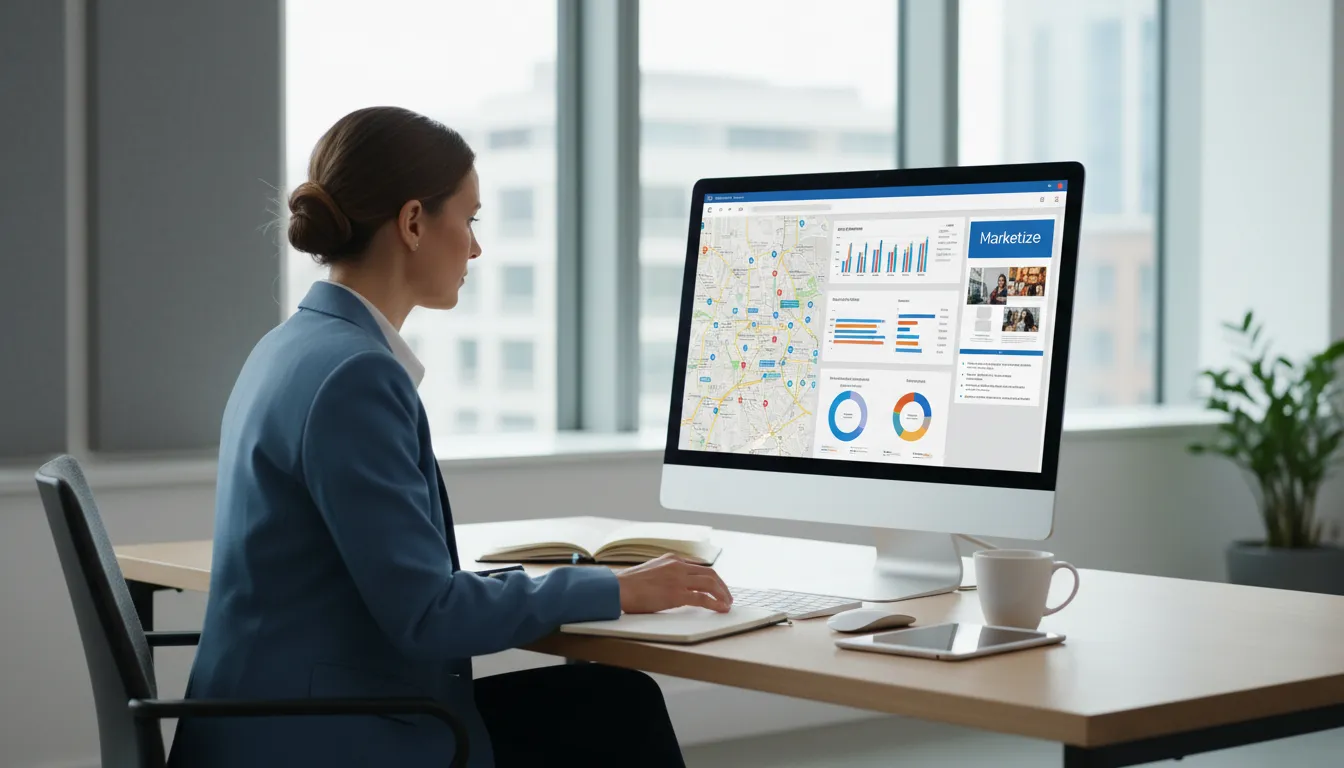
Guessing "probably about 5,000 homes in this area" leads to ordering too many leaflets you won't use or too few that leave coverage gaps. Platforms like Marketize provide letterbox counting tools that show you exactly how many deliverable addresses exist in any drawn boundary — trace your target area on the map, get an instant count. No guesswork, no waste. This is one of the core leaflet distribution services the platform provides free to every user.
This precision matters. If you order 5,000 leaflets for an area containing 4,200 letterboxes (accounting for the standard 5% undeliverable allowance due to "No Junk Mail" signs or inaccessible properties), you've wasted money on 800 unnecessary prints. If you order 3,000 for that same area, you've left 1,200 homes uncovered.
Minimum Effective Quantities
While platforms like Marketize enable campaigns from as low as 500 leaflets, industry standards for predictable results are higher:
- Local services (plumbers, cleaners, gardeners): 3,000–5,000 minimum. With typical response rates of 0.5–1.5%, this generates 15–75 inquiries — enough to evaluate performance meaningfully.
- Food and hospitality (restaurants, takeaways, cafés): 5,000–10,000 minimum. Higher potential response rates (1–3%) but need volume to build brand recognition in the local area.
- Professional services (estate agents, solicitors, accountants): 10,000+ recommended. Lower response rates (0.3–1%) but higher lifetime customer value makes volume worthwhile.
Distributing below these thresholds rarely produces enough data to determine whether your campaign worked or needs optimisation.
Choose Distribution Areas Strategically
Where you distribute matters as much as what you distribute.
Demographics Over Geography
Don't just draw a circle around your business location and call it targeting. Use demographic data to filter areas by the characteristics that actually matter for your offer. Planning a campaign for premium services? Filter areas to show only postcodes with median household income above £50,000. The addressable market shrinks dramatically, but the response rate from relevant households increases significantly.
Marketize's demographic targeting tools let you overlay filters for income brackets, age ranges, property types, and family composition onto maps. You see exactly which postcodes match your criteria and how many homes that represents. Understanding how this fits into the full leaflet distribution system — from area selection through to verified completion — helps you get the most from these tools.
Proximity Strategy
Consider realistic service radius based on your business type:
- Restaurants and takeaways: 1–3 mile radius typically. People rarely order from further away when closer options exist.
- Retail stores: 2–5 miles. Depends on whether you're convenience shopping (closer) or destination shopping (further).
- Service businesses: 5–15 miles. Tradespeople, cleaners, and similar services can travel further.
- Professional services: 10–20+ miles or targeted affluent areas regardless of distance. Clients will travel for quality legal, financial, or medical services.
Testing vs Saturation
Two valid approaches:
Saturation strategy: Distribute heavily to fewer areas, building dominant local presence. Better for brand building and consistency.
Testing strategy: Distribute lightly across multiple areas to identify which perform best, then concentrate future campaigns on winners. Better for market expansion and optimisation.
Neither is universally better. Saturation works when you're confident in your targeting. Testing works when you're exploring new markets.
Budget All Campaign Costs
Leaflet campaign planning requires understanding total investment, not just distribution fees. For a detailed, up-to-date breakdown of what leaflet distribution costs across the UK in 2026 — by area type, campaign size, and service level — the prices guide gives you reliable benchmarks before you start budgeting.
Distribution Costs
Vary by type and area density:
- Shared distribution (leaflet bundled with 2–3 non-competing businesses): £30–50 per thousand
- Solus distribution urban (your leaflet delivered alone in high-density areas): £50–70 per thousand
- Solus distribution suburban: £60–80 per thousand
- Solus distribution rural: £80–120 per thousand
Solus campaigns typically achieve 30–50% higher response rates than shared because there's no competition for attention in the same delivery. Whether that justifies the cost depends on your margin and conversion rates.
Printing Costs
Per thousand A5 leaflets:
- Budget quality (130gsm): £40–60
- Standard quality (170gsm): £50–80
- Premium quality (250gsm gloss): £80–120
Don't cheap out on printing for premium services. A flimsy leaflet advertising luxury services sends the wrong message.
Platform Fees
Marketize charges 5–10% of distribution cost, with all verification tools (GPS tracking, photo proof, letterbox counting, demographic targeting) included free. No hidden charges for features you need. You can explore the full Marketize campaigns dashboard to see how planning, ordering, and tracking all sit in one place.
Design Costs
Budget £50–300 for freelance designers, £300–1,000+ for agencies if you're not designing in-house.
Example Total Investment
Estate agent campaign — 10,000 households:
- Distribution: 10,000 leaflets, solus suburban = £750
- Printing: A4, 170gsm, full colour = £600
- Design: Freelance designer = £200
- Platform fee: 8% of distribution = £60
- Total: £1,610
If this generates 30 valuation requests (0.3% response) and converts 3 to listings (10% conversion), that's £537 cost per listing. Evaluate against your average commission to determine ROI.
Select Distribution Type Based on Goals
Solus vs Shared Distribution
Solus distribution (your leaflet delivered alone):
- Higher cost (£60–120 per thousand)
- No competing messages in same delivery
- Better for premium services, competitive markets, strong offers
- Response rates typically 30–50% higher than shared
Shared distribution (bundled with 2–3 others):
- Lower cost (£30–50 per thousand)
- Competes for attention with other leaflets
- Better for budget campaigns, testing new markets, price-driven offers
Letterbox vs Hand-to-Hand
Letterbox distribution (posted through residential letterboxes):
- Cost-effective, complete coverage
- Standard for most commercial campaigns
- Fully verifiable with GPS proof of delivery tracking and photos
- Works for all demographics and areas
Hand-to-hand distribution (standing in high-footfall public areas or walking public streets):
- More expensive (£80–150 per thousand)
- Direct engagement, immediate questions answered
- Good for events, time-sensitive promotions, launches
- Can only operate in public spaces — not shopping centres or private estates
Most campaigns use letterbox distribution. To understand how leaflet distribution works end-to-end — from distributor assignment through to proof of completion — that guide covers the full process.
Time Your Campaign Strategically
When you distribute affects results almost as much as where.
Seasonal Considerations
- Avoid major holidays: Distribution around Christmas, Easter, or school holidays often sees lower response. People are distracted or away.
- Consider industry cycles: Gyms see high interest in January and September. Gardening services peak in spring. Financial services often see increased interest before tax year end.
- Weather impact: Heavy snow or severe weather can delay distribution and reduce response. Plan buffer time for weather-related delays.
Day of Week
Mid-week delivery (Tuesday–Thursday) often performs best for services. People are in routine, not rushing into or recovering from weekends.
Weekend delivery can work well for food service and hospitality. Saturday delivery for Friday–Sunday offers maximises relevance.
Frequency and Consistency
Single campaigns rarely build lasting brand recognition. Consistency over time outperforms one-off drops:
- Monthly distribution to the same areas: Builds familiarity, establishes presence, captures people at different decision points.
- Bi-monthly rotating areas: Balances repetition with broader reach, good for growing businesses.
- Quarterly saturation: Works for seasonal businesses or those with longer sales cycles.
Platforms like Marketize provide scheduling tools and campaign dashboards that make planning regular drops easier than managing each campaign separately. The campaign strategy and planning hub covers timing frameworks, frequency models, and how to integrate leaflet drops with your broader marketing calendar.
Set Up Proper Tracking
A leaflet drop without tracking is guesswork with a GPS trail attached. You need to know what's working.
Essential Tracking Mechanisms
- Unique phone numbers: Virtual numbers that forward to your main line cost £5–15/month and track exactly how many calls came from your leaflet campaign.
- QR codes: Direct people to campaign-specific landing pages. Track scans, page visits, and conversions. Show which areas engaged most.
- Unique promotional codes: "Use code LEAFLET25 for 25% off" tracks redemptions precisely. Calculate conversion rate (leaflets delivered vs codes used).
- Dedicated landing pages: yourwebsite.com/special-offer tracks visits from leaflet campaigns specifically, measures engagement and form completions.
Attribution Windows
Allow sufficient time for full response:
- Week 1: Expect 40–50% of total responses
- Week 2: 25–30%
- Week 3: 15–20%
- Week 4+: 10–15%
Evaluating campaign success after three days misses most of your responses.
ROI Calculation
Basic formula: (Revenue from campaign − Campaign cost) ÷ Campaign cost × 100
Example:
- Total investment: £1,200
- Tracked responses: 150 customers used promotional code
- Average transaction: £35
- Total revenue: £5,250
- ROI: (£5,250 − £1,200) ÷ £1,200 × 100 = 338%
Calculate based on customer lifetime value, not just first purchase, for service businesses where customers return repeatedly.
Verify Distribution Properly
Planning includes choosing distributors and verification methods that ensure your campaign actually happens. For a detailed breakdown of how GPS tracked leaflet delivery works — what data gets captured, how EXIF metadata prevents photo fraud, and what a complete proof of delivery report looks like — the dedicated guide covers every element.
GPS Tracking Requirements
Modern platforms provide real time delivery tracking with offline data storage (eliminates blank spots in poor signal areas), timestamped and geo-stamped photos appearing as pins on route maps, and letterbox count verification that cross-references routes against known address data.
This isn't premium service — it's baseline expectation. Any distributor refusing GPS tracking is refusing accountability. To understand how the underlying leaflet distribution software works and why the technical architecture matters for fraud prevention, that guide explains it in plain English.
Payment Protection
Escrow-style payment protection holds funds until verified completion. You review GPS trails, photos, and coverage before confirming payment releases. This protects both parties: you don't pay for undelivered work, distributors don't chase unpaid invoices. Platforms like Marketize include neutral third-party dispute resolution that reviews evidence and makes fair determinations when issues arise. For a full guide on spotting fraud before it happens, how to prevent dishonest leaflet distributors covers every warning sign and technology solution available right now.
Reviewing Proof
Before confirming completion, check:
- Does GPS route cover all specified streets?
- Are photos spread evenly throughout route with proper geotags and timestamps?
- Does timing match expected duration for quantity and area?
- Does letterbox count verification confirm route coverage matches claimed delivery?
Most platforms give you 24–48 hours to review. Use that time. Don't just click confirm and hope. For a side-by-side comparison of which platforms provide the strongest verification — GPS quality, photo verification, letterbox counting, and payment protection all compared — the best leaflet delivery tracking apps gives you an honest breakdown.
Common Planning Mistakes to Avoid
- Distributing without clear objectives: Makes measurement impossible and optimisation pointless.
- Choosing areas by convenience rather than demographics: "We'll do the streets near us" wastes budget on households unlikely to respond.
- Insufficient quantity for statistical significance: 500 leaflets provides too few responses to determine whether your campaign worked or your offer needs improvement.
- No tracking mechanism: Without QR codes, unique phone numbers, or promotional codes, you can't attribute responses to the leaflet campaign.
- One-off campaigns expecting lasting impact: Single drops rarely build brand recognition. Consistency over months creates familiarity.
- Ignoring verification: Trusting distributors without GPS proof reintroduces the exact problem verification was designed to solve.
Planning a successful leaflet distribution service UK campaign isn't about creative genius or marketing magic. It's about making strategic decisions based on data, setting clear objectives you can measure, calculating realistic quantities, choosing areas where your target customers live, and verifying delivery properly.
The businesses seeing consistent ROI from flyer distribution aren't lucky — they're systematic. They test, measure, optimise, and repeat. They use tools like letterbox counting and demographic targeting to make informed decisions instead of guesses.
New to the whole area and want to understand the basics before planning anything? Leaflet distribution fundamentals covers what a well-run campaign looks like from the ground up. And if you're thinking about becoming a leaflet distributor in 2026 yourself — whether as a flexible income stream or a full-time operation — that guide walks through how the distributor side of the marketplace works.
For detailed guides on area selection, timing strategies, and integration with digital marketing, Marketize's website offers resources built from decades of industry experience. The technology behind modern leaflet distribution makes every part of this process more measurable, more accountable, and more predictable than it's ever been. The tools exist now. The question is whether you'll use them properly or keep planning campaigns based on hope.