25 May 2026 · 14 min read
How to Use GPS Tracking for Campaign Analysis
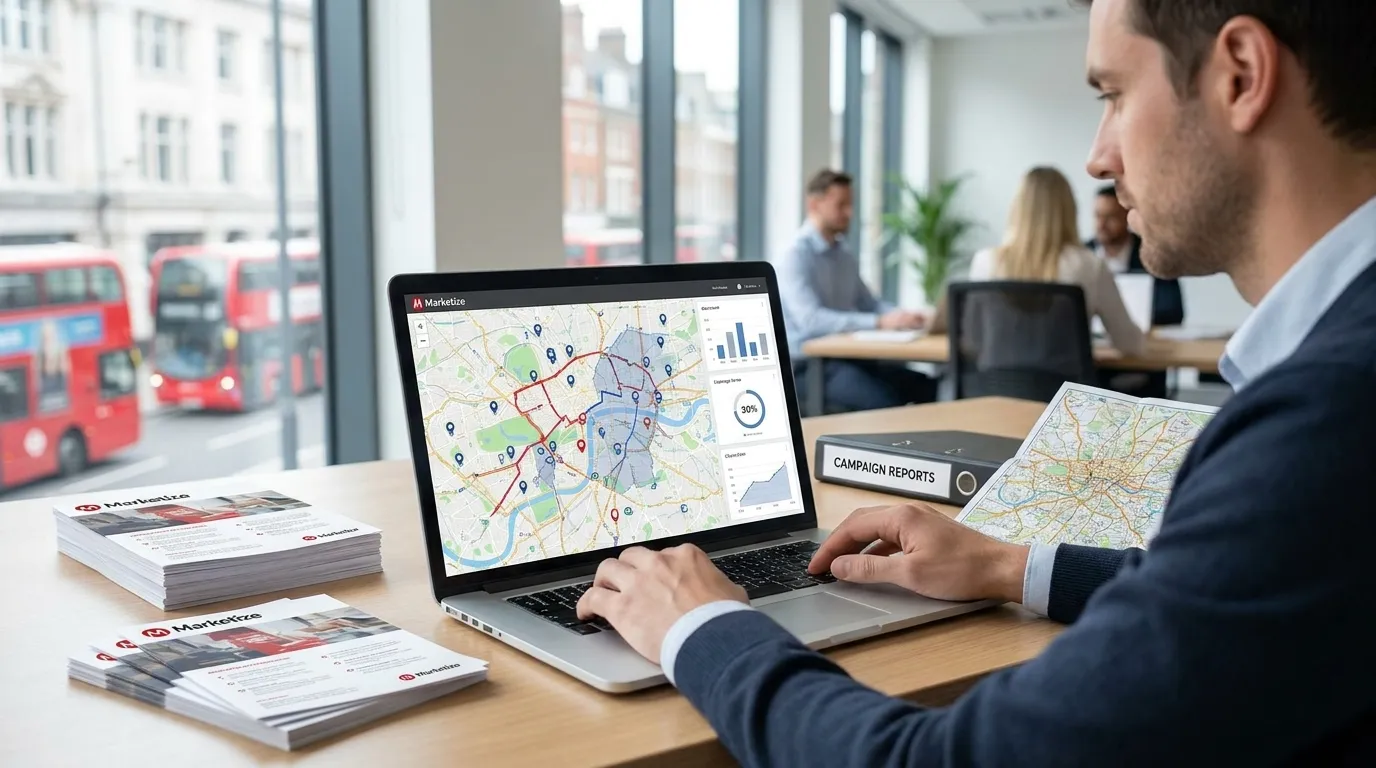
Most businesses think GPS tracking in leaflet distribution serves one purpose: proving the leaflets were actually delivered. And yes, that matters enormously. Without verified coverage data, you're trusting delivery happened because someone told you it did - which, in an industry historically plagued by incomplete work and false completion claims, isn't a safe assumption.
But GPS tracking does much more than verify delivery. When you know how to use real time delivery tracking for campaign analysis properly, it becomes a source of genuine campaign intelligence - showing you which areas were covered when, how efficiently, with what consistency across streets and time windows, and how coverage data correlates with response rates when cross-referenced against conversion tracking.
The businesses getting the most from GPS tracking aren't just using it as a fraud prevention tool. They're using it as an analytics engine that tells them where to focus future budgets, which areas responded best, whether timing of distribution affected results, and how to plan better routes for the next campaign. That's the difference between GPS as protection and GPS as intelligence. For the full explanation of what the GPS data layer captures technically - offline storage, route coordinates, timestamp precision, photo metadata - what is GPS tracked leaflet delivery covers every element before we get into the analysis.
This article is part of the analytics and measurement hub. Whether you run campaigns yourself or commission a distribution agency, understanding what GPS data reveals - and how to act on it - will improve every campaign you run from this point forward.
What GPS Tracking Actually Captures
Before analysing GPS data, you need to understand what's actually being recorded. Modern distribution GPS tracking captures continuous location data throughout the distribution shift, recording position at regular intervals as the distributor walks their route. This creates a trail of location points that, when connected, shows the exact path walked - which streets, which direction, at what speed, and at what times.
That trail includes:
- Geographic coverage: Every street walked appears in the data. Streets not in the trail weren't covered. It's as definitive as location data gets.
- Timing information: GPS timestamps show when distribution started, when it ended, how long each section of the route took, and how consistent pace was throughout.
- Speed and movement patterns: Movement speed across the trail reveals whether distribution was thorough or rushed. Unusually fast sections raise questions. Long stationary periods appear as gaps or clustered points.
- Offline data continuity: Modern solutions with offline data storage record location continuously without needing active signal, syncing everything when connection returns. This is critical for accurate analysis - you need complete data, not data minus every area with patchy reception.
Pair this with geotagged, timestamped photos taken at intervals throughout the route - which appear as clickable pins on the GPS map - and you have both the route data and visual confirmation of leaflet delivery at specific locations. The fraud tactics that GPS data catches, and how each is detected, are covered in depth in how to prevent dishonest leaflet distributors. Here we focus on using that same data for forward-looking campaign analysis.
Using GPS Data to Verify Coverage Quality
The first analytical use of GPS data is verifying that coverage actually matched what was planned and paid for.
Planned Route vs Actual Route
Your campaign area was mapped before distribution started. GPS data shows whether the actual distribution matched that plan. Systematic gaps in coverage - an entire street missing, or half a housing estate not appearing in the trail - indicate either incomplete work or a genuine access problem. The difference matters: a distributor who skipped Oak Street because it seemed inconvenient requires management action; a distributor who skipped Oak Street because of roadworks represents a legitimate access issue.
GPS data alone shows the gap. Cross-referencing with photo evidence distinguishes between the two. This is why the combination of GPS trail and photo proof is more analytically useful than either alone - and why how to avoid leaflet theft and false delivery claims treats the two as inseparable parts of a complete verification system.
Letterbox Count Cross-Referencing
GPS coverage data becomes even more useful when cross-referenced against letterbox counts. If your target area contains 9,500 deliverable properties (after accounting for the 5% standard undeliverable allowance), the GPS trail should cover streets that contain approximately that many letterboxes. If GPS shows streets were covered but letterbox count cross-referencing suggests only 7,000 deliverable homes were actually on those streets, the shortfall needs explanation.
Letterbox counting tools provide the accurate property baseline that makes this cross-referencing meaningful. The tool knows exactly how many deliverable addresses exist on each street in your coverage area - so when you overlay GPS trail data, the maths either confirms complete coverage or exposes discrepancies that trail-only checking misses. This analysis catches selective property skipping - where a distributor walks a street but skips properties that require extra effort - that GPS trail verification alone wouldn't detect.
Timing Analysis for Quality Assurance
Speed data from GPS trails serves as a basic quality check. Industry benchmarks suggest 150-200 letterboxes per hour in high-density urban areas, 100-150 in suburban environments, and 50–100 in rural or low-density areas. If a distributor's GPS trail shows 5,000-letterbox coverage completed in three hours when six was expected based on area density, something is wrong - either the area is significantly denser than estimated, the distributor rushed through inadequately, or coverage was less thorough than the trail suggests.
Conversely, a trail showing reasonable timing aligned with density benchmarks, consistent speed throughout, and no suspicious gaps is strong evidence of thorough, professional work. This is also the data that distributor performance tracking systems use to populate speed accuracy metrics - one of the five core performance indicators that separate tier-1 proven distributors from those needing closer monitoring.
GPS Data as Campaign Planning Intelligence
This is where route tracking for leaflet delivery transitions from protection to strategy. Every campaign generates coverage data that should inform the next.
Building a Coverage History Map
Each GPS-verified campaign adds to a historical dataset of which streets have been covered, how many times, and in which months or seasons. After three campaigns, you have a coverage map showing saturation levels across your target territory. Some streets will appear in every campaign. Others might have been covered once. And some that fall within your theoretical target zone might never appear in a trail - either because route planning missed them or because distributors consistently bypass them.
Coverage history helps you make better planning decisions. Streets saturated across five consecutive monthly campaigns may benefit from a rest period - recipients there either know your brand or have actively filtered you out. Fresh streets within good demographic areas might generate stronger response rates simply because recipients haven't seen your leaflet before. How often you should deliver leaflets covers the frequency models that use saturation analysis to decide when to rest areas and when to return to them with fresh messaging.
Identifying Untapped High-Value Areas
Coverage history maps occasionally reveal a counterintuitive finding: areas that were supposed to be covered but consistently show gaps in GPS data. These might be streets distributors find inconvenient, or areas where route planning consistently underestimates the time required. If those untapped areas happen to sit within good demographic territory - high household income concentrations, strong family composition match, property type alignment - they represent potential response uplift waiting to be captured.
Specifically targeting these areas in the next campaign, with route planning that makes them easier to cover efficiently, is exactly the kind of tactical improvement that GPS data enables. The demographic targeting methodology for identifying which of those untapped areas are worth prioritising is covered in how to choose leaflet distribution areas.
Route Efficiency Analysis
GPS trail timing data identifies where distribution slows down unexpectedly. Sections of a route that consistently take longer than density benchmarks suggest might have genuine access challenges (gated estates, flat complexes requiring entry system attempts) or might indicate route planning inefficiencies (distributors walking inefficient paths between properties).
Understanding where time gets absorbed helps you redesign routes for future campaigns. If a particular section of a route consistently accounts for 30% of time but only 15% of deliveries, redesigning how distributors approach that section can improve overall efficiency and reduce campaign costs without reducing coverage quality. For how this route data feeds into distributor management decisions - including which distributors consistently demonstrate strong route efficiency and which have recurring timing anomalies - how to manage leaflet distributors covers the full performance tracking framework.
Correlating GPS Coverage With Response Data
This is the most analytically powerful use of GPS tracking: cross-referencing coverage data with campaign response data to identify which areas actually generated conversions. For the full conversion tracking methodology - promo codes, QR codes, dedicated phone numbers, and how to set up area-specific tracking - how to track conversions from leaflets covers every method.
Area-Level Response Mapping
If your campaign used area-specific tracking mechanisms - different QR codes for different zones, dedicated phone numbers by postcode cluster, or vouchers differentiated by leaflet design - you can directly compare GPS coverage by area against response rates by area.
Zone A: GPS confirms 3,200 homes covered. Tracking data shows 96 conversions. Response rate: 3%.
Zone B: GPS confirms 4,100 homes covered. Tracking data shows 41 conversions. Response rate: 1%.
Now you know Zone A significantly outperformed Zone B. You also have GPS data telling you exactly which streets those zones cover. Combined with demographic data about those streets, you can start hypothesising why Zone A performed better - higher income households? More families? Less competing local alternatives? - and use those hypotheses to select new areas with similar demographic profiles for the next campaign. Without GPS confirming actual coverage (rather than planned coverage), this analysis would be unreliable.
For context on what those response rates mean - whether 3% in Zone A is exceptional, typical, or below potential for your business type - what is a good leaflet ROI gives you the industry benchmarks by business type and campaign maturity.
Timing of Coverage vs Timing of Response
GPS data tells you when distribution happened - specifically which days and times leaflets arrived at properties. Response tracking data tells you when conversions occurred. Correlating these reveals your audience's typical decision timeline.
If distribution in Area A happened on Tuesday morning and responses peaked Thursday-Friday, you have a roughly 48-72 hour decision cycle for that audience. If responses trickled in over three weeks, you're dealing with a slower consideration process. This timing intelligence affects future campaign scheduling. Timing strategies for leaflet delivery covers the industry-specific demand cycles that give you the benchmarks to distinguish a genuinely slow campaign from one that's simply taking longer to convert - and when to extend your tracking window before drawing conclusions.
Saturation Effects Over Repeated Campaigns
GPS coverage history combined with per-campaign response tracking shows something particularly valuable for businesses running consistent monthly or bi-monthly campaigns: the saturation curve.
Typically, response rates in a given area improve from campaign 1 to campaign 3–4 (brand familiarity building), then plateau, then gradually decline if the same message hits the same area too frequently.
Example: Campaign 1 in Area A: 0.9% response. Campaign 3: 1.8% response. Campaign 5: 1.6%. Campaign 7: 1.1%. The data suggests Area A is past its peak and should either be rested or approached with a new offer designed to re-engage familiar recipients.
Knowing where individual areas sit on this curve is only possible when GPS data gives you verified, area-specific delivery records across campaigns. Leaflet distribution in 2026 covers how this kind of data-driven saturation management is becoming standard practice among professional agencies - separating measurable, accountable distribution from the guesswork model it's replacing.
Practical Steps for GPS Campaign Analysis
Understanding the theory matters less than applying it consistently. Here's a practical workflow for using GPS data in campaign analysis:
- After each campaign, download and store GPS trail data. Don't just check it for verification then discard. This is your coverage archive.
- Cross-reference trail coverage against your letterbox count estimate. Do the streets covered align with the property counts you planned for? Any significant discrepancies need investigation.
- Map coverage against response data. If you used area-specific tracking, compare delivery counts by zone against conversion counts by zone. Calculate response rates per area.
- Note timing patterns. When did distribution happen? When did conversions peak? How long was the response tail?
- Add findings to your campaign history document. Even a simple spreadsheet recording campaign date, areas covered, GPS-confirmed delivery counts, response rates, and notable observations builds into a genuinely useful planning resource over time.
- Feed insights into next campaign planning. Higher-performing areas get more budget. Underperforming areas get scrutinised. Route planning addresses efficiency gaps identified in previous trail analysis.
This process takes an hour or two after each campaign. Over six months and four campaigns, it transforms your approach from "distribute and hope" to "distribute, measure, and improve." The campaign strategy and planning hub covers how to build this cycle into a formal 12-month campaign calendar with defined review points, area rotation schedules, and testing frameworks.
What Good GPS Tracking Data Looks Like
Not all GPS tracking is equal. For meaningful analysis, you need:
- Continuous coverage without gaps. Offline storage ensures signal drop-outs don't appear as missed areas. If your verification system only records when signal is active, gaps in the data don't tell you whether the distributor missed those streets or just had poor reception there.
- Accurate timestamps. GPS data without reliable timestamps can't be used for timing analysis. Every location point should have a precise time attached.
- Integration with photo verification. GPS trail plus timestamped, geotagged photos confirming delivery at specific points in the route is far more analytically useful than GPS trail alone. Photos validate that the trail represents actual distribution, not just walking with leaflets still in the bag.
- Accessible, reviewable format. Data you can't easily review doesn't get reviewed. Platform dashboards showing GPS trails on maps, with clickable photo pins and coverage summaries, make analysis practical rather than technically demanding.
For a comparison of which leaflet delivery tracking apps and platforms provide the strongest GPS data quality - offline storage, timestamp precision, photo metadata integration, and campaign dashboard accessibility - that guide gives you an honest breakdown before committing to a platform. And for a deeper look at how technology in leaflet distribution is evolving - including AI-powered anomaly detection and automated quality scoring that build on the GPS foundation described here - the future of tech guide covers where this is heading.
GPS as Intelligence, Not Just Verification
GPS proof of delivery turns flyer distribution from an unverifiable act of faith into a documented, reviewable, improvable process. Coverage data verifies delivery happened. Cross-referenced with response tracking, it shows which areas convert and which don't. Historical trail data builds coverage maps that improve planning. Timing data reveals your audience's decision cycles. And route efficiency analysis reduces campaign costs over time.
The leaflet distribution tracking data from each campaign compounds in value. A single campaign's GPS record is verification. Six campaigns of GPS records is a strategic asset - a coverage map, a response correlation database, a route efficiency baseline, and a saturation tracker all in one.
For door to door leaflet distribution to work as a genuine marketing channel rather than a hopeful spend, this analytical layer is what makes the difference. How to measure leaflet campaign performance covers the full measurement framework that GPS analysis sits within - from pre-campaign tracking setup through to post-campaign ROI calculation and lifetime value analysis.
Ready to run campaigns with GPS verification, photo proof, and coverage dashboards built in? View campaigns on Marketize - every campaign includes the full GPS and photo verification layer as standard, giving you the data foundation for the kind of analysis covered in this article.