2 October 2026 · 10 min read
What Separates a Good Leaflet Distributor From a Great One
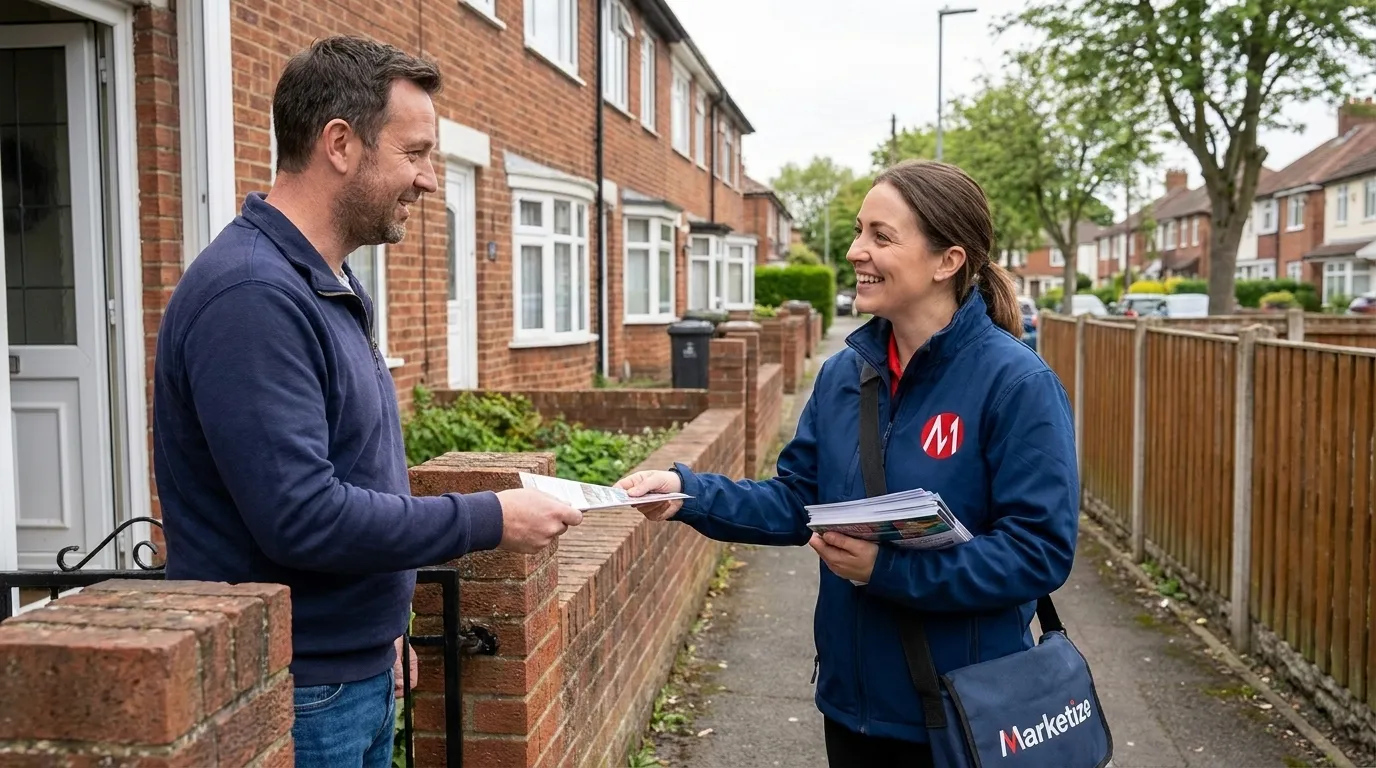
Most people who start distributing leaflets are good at it within a few shifts. The physical routine becomes familiar quickly. You figure out the most efficient way to carry your bag, how to handle stiff letterboxes, how to read a street layout. You get faster. You get tired less quickly.
But there's a gap between being good at the physical job and being genuinely great at it - in the sense that matters commercially. Great leaflet distributors get more work, earn better rates, receive repeat bookings without having to chase them, and build a record that opens doors over time. Good ones do the job and move on. The difference between the two isn't talent or physical fitness. It's a set of habits, standards, and professional instincts that most people never get told about - because most training for this work doesn't go anywhere near this depth.
Here's what those habits actually look like.
The GPS Record Is Your Reputation
If you're distributing through a platform that uses GPS tracking - and any serious distribution operation now does - your GPS record isn't just proof that you did the job. Over time, it becomes your professional portfolio. A history of complete, consistent GPS trails tells clients and agencies something very specific: this person covers the full area, every time, without shortcuts.
That's a rarer quality than it sounds.
GPS data shows pace as well as position. A distributor who rushes through a round leaves a trail that, when looked at carefully, shows movement too fast to have been posting at each property. Coverage that clusters on easy streets and thins out on the harder ones is visible. A distributor who started tracking late - after they'd already covered the first few streets - shows a trail that begins mid-route.
Great professional leaflet distributors start tracking before they leave for the job. They maintain a consistent pace through the full area, including the inconvenient sections. They don't thin out their coverage on the streets that take more effort per letterbox. And their trails, over dozens of campaigns, tell a consistent story: thorough, reliable, complete.
That story becomes commercially valuable. Clients reviewing distributor profiles and past campaigns can see it. Agencies allocating premium jobs go to distributors with records like this first. Understanding how GPS tracking feeds into campaign analysis shows exactly why this record matters - it's the foundation of a data-driven distribution reputation that sets you apart.
Reliability Outweighs Every Other Quality
The single quality that distinguishes great distributors most clearly from good ones is reliability. Not speed, not friendliness, not even thoroughness - though all of those matter. Reliability.
Reliability means accepting a job and completing it. It means communicating proactively if something changes, rather than going quiet and hoping nobody notices. It means turning up on the agreed date, not a day or two later when it's more convenient.
This sounds basic. It is basic. But the industry is full of distributors who are inconsistent about it - who take on too much work, or underestimate a round's difficulty, or simply don't show up when conditions aren't ideal. The client or agency on the other end of that relationship remembers.
Great distributors manage their commitments deliberately. They don't accept more work than they can complete well. If something genuinely prevents them from finishing - illness, an unexpected access problem, anything that changes what's possible - they communicate immediately, not after the campaign was supposed to be done. That kind of communication, however inconvenient it feels, builds trust faster than any amount of smooth delivery. It's one of the core qualities agencies look for when building distribution teams.
Honest Non-Delivery Recording Is a Professional Skill
Every distributor encounters properties they can't deliver to. 'No Junk Mail' signs, gated entrances with no accessible letterbox, buildings where the entry system is broken and there's genuinely no way in, addresses where an aggressive animal makes the approach unsafe. These are legitimate non-deliveries, and across most areas, they'll account for roughly five percent of addresses - sometimes a bit more in areas with high concentrations of 'No Junk Mail' signs.
How a distributor handles these separates the professionals from everyone else.
Bad practice: ignoring them. Posting to addresses that clearly display 'No Junk Mail' signs undermines the client's campaign (residents who've opted out are not the audience) and can generate complaints. It also shows up as a red flag for clients reviewing completion data.
Bad practice (in the other direction): inflating non-delivery records to reduce the number of letterboxes that actually need to be visited. Letterbox counting tools can identify when non-delivery figures are notably higher than expected for a given area - and will investigate.
Great practice: recording each legitimate non-delivery at the address, in real time, using the dedicated recording function in the app. Giving a specific reason. Not retrospectively. The record is timestamped and geolocated, which means it can be cross-referenced against the GPS trail. If the non-delivery is genuine and recorded correctly, it protects you. If it isn't, the inconsistency will be visible. The full picture of how false delivery claims arise and how to avoid them is worth understanding before you encounter one.
Communication During the Job Is an Underrated Skill
Most distributors communicate at two points: when they pick up the work and when they mark it complete. Great distributors communicate in between - specifically, when something unexpected happens.
A road closure affecting a significant section of the route. An estate that turns out to be fully gated, with no accessible communal letterbox. A building with a broken entry system covering multiple flats. These are the kinds of access issues that, if not flagged during distribution, create questions in the completion report. The client sees a gap in the GPS coverage or a cluster of non-deliveries and wonders what happened.
If the distributor messages during the round - 'encountered road closure on Oak Street, rerouting' or 'entry system to Birch Court is out of order, recording all flats as non-deliverable, photo attached' - the client receives a real-time explanation alongside the data. That's a different relationship from one where the distributor disappears for six hours and the completion report contains unexplained gaps.
Great distributors don't over-communicate. They don't send updates every twenty minutes. But they have the professional instinct to flag anything unusual that will show up in the data, so it's never a surprise.
Letterbox Technique Shows in the Details
The physical technique at the letterbox matters more than most people assume - and not just for quality reasons.
A leaflet left half-hanging out of a letterbox is a security issue. It signals to anyone passing that the property may not have been checked that day. Beyond the safety concern, it tells every neighbour who walks past that whoever delivered it didn't finish the job properly. Great distributors post fully, every time.
Where a letterbox is stiff or narrow, they bend the leaflet gently along its length - a smooth curve, not a crease - to ease insertion. A creased leaflet arrives looking like rubbish before it's been read, which directly reduces the campaign's response rate. That matters to the client, and clients remember it.
They also never push their hand through to the other side of a letterbox. That rule has nothing to do with dog warning signs on the gate - it applies at every property, no exceptions.
These aren't difficult habits to build. But they're the kind of detail that separates distributors who clients request by name from those who simply get added to the general pool.
Route Planning Is Part of the Job
The best distributors plan their routes before they arrive. Not on their phone while standing at the start point, but the evening before - looking at the layout, identifying the logical flow through the area, noting where the natural crossing points are and planning the sequence of streets to minimise unnecessary backtracking. Planning a successful leaflet campaign covers the tools and methods that make this faster and more precise than trying to read an area cold.
Ten minutes of planning saves a significant amount of time over a full shift. Fewer unnecessary crossings. Less doubling back. A cleaner GPS trail that shows methodical, efficient coverage rather than the kind of wandering pattern that suggests the route was being figured out on the move.
This planning also helps with bag loading and weight management. Knowing roughly how many properties are in each section of the route means you can manage your remaining stock sensibly, rather than arriving at the halfway point with either far too many leaflets or not enough.
The Return of Unused Leaflets Is Non-Negotiable
When a round ends with leaflets remaining - because of legitimate non-deliveries, access issues that reduced the deliverable area, or any other genuine reason - those leaflets go back. Every single one.
Not discarded. Not posted multiple times through the same letterbox to reduce the remaining bundle. Both of these are detectable through platform data - letterbox counting tools flag delivery figures that don't match the properties covered - and both result in financial and reputational consequences that aren't worth the time they save.
Returning unused stock is part of honest record-keeping. When the non-delivery log accounts for the returned quantity, the numbers tell a consistent, verifiable story. That consistency is what builds a record worth having.
Great distributors hand back what they didn't use and don't find it uncomfortable. They know the non-delivery allowance is legitimate, that returning leaflets from properly recorded non-deliveries is expected and normal, and that the only thing that creates a problem is an unaccounted-for shortfall.
Physical Preparation Makes a Difference Over the Long Term
Leaflet distribution is physical work. Ten to fifteen miles in a day isn't unusual, carrying a bag that may start at ten to fifteen kilograms. Understanding how many letterboxes a distributor can realistically cover in a day helps set honest expectations - and distributors who treat preparation as incidental find the work harder than it needs to be and tend to cut shifts short.
Great distributors treat preparation as professional standard. Full charge on the phone before leaving. A portable power bank if battery life is unreliable. Sufficient water for the full shift. Food if the round is in an area without convenient shops. A rain cape - because the UK weather doesn't negotiate. Appropriate footwear for hours of walking.
Starting in the morning and finishing before dark isn't just practical - it's part of being a professional. A distributor approaching residential properties after dark creates unnecessary concern for residents. Good distributors understand why this matters and plan their shifts accordingly.
Great Distributors Know What They're Building
The distributors who do best over time aren't just doing a job. They're building something - a reputation, a record, a track record that opens doors to better-paid work, to premium campaigns, to being the person an agency calls first when something time-sensitive comes in. The economics of honest distribution explain why that track record translates directly into commercial value.
Every shift contributes to that record. Every GPS trail, every non-delivery log, every communication with a client - it accumulates. How to prevent dishonest distributors from undercutting your reputation is something every serious operator should understand - because when platforms track distributor performance rigorously, honest operators rise and unreliable ones don't last.
That infrastructure protects honest verified leaflet distributors and makes their professional record visible in a way that simply wasn't possible before these tools existed. Using it well - treating every round as something that adds to a portfolio rather than just a shift to get through - is the mindset that separates great distributors from good ones.
The articles in the distributor career path series cover each of these dimensions in depth, because the career path in this work is real for people who approach it professionally.