30 October 2026 · 10 min read
Jobs to Decline, and How to Decline Them
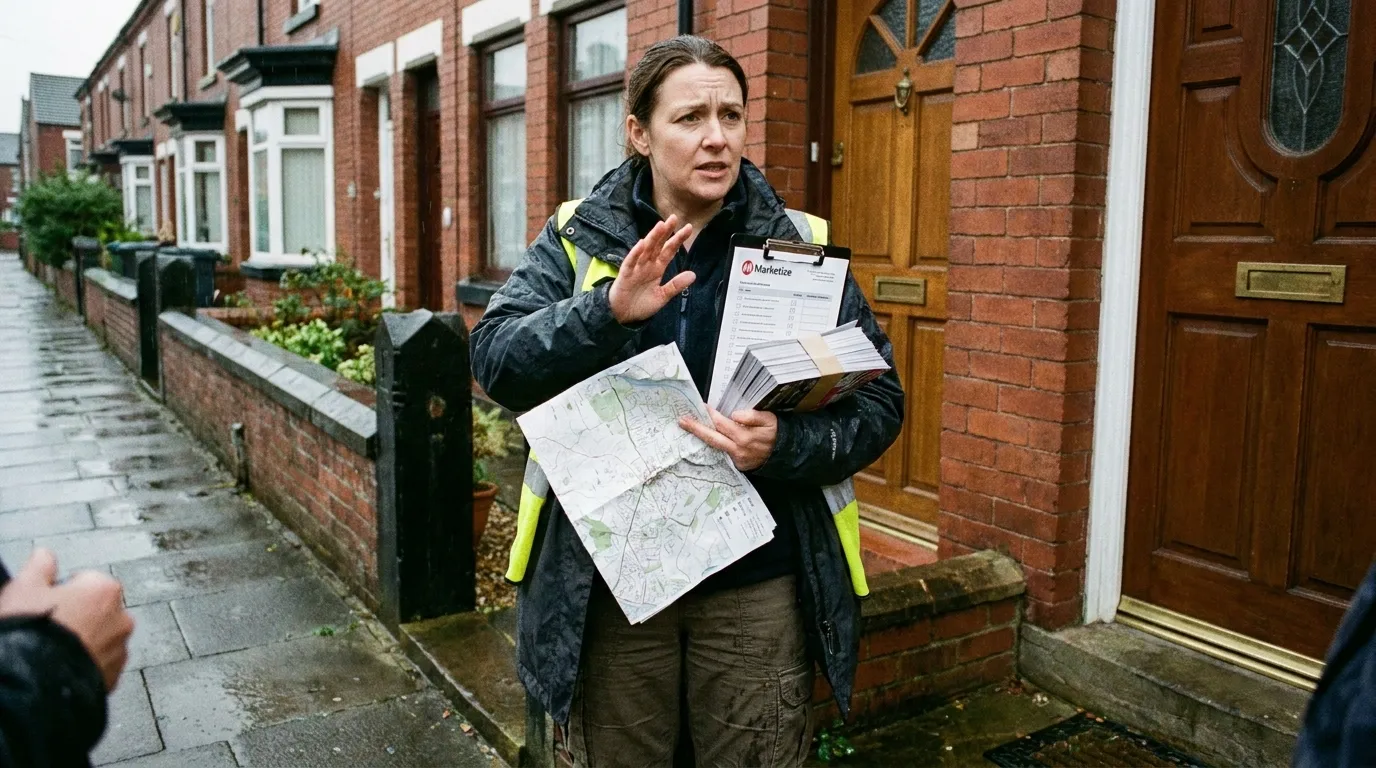
Saying yes too easily is one of the most consistent mistakes new leaflet distributors make. The work seems accessible, the rate sounds fine, the brief is short - so they confirm and only later realise they've agreed to something that doesn't work for them. The result is either a rushed delivery that damages their record, a late pull-out that damages their relationship with the client, or a completed job that earns significantly less than it should have for the effort involved.
Knowing which jobs to decline - and doing it clearly and professionally before you're committed - is a skill worth developing early. It protects your time, your record, and your reputation. And done correctly, it doesn't close doors. It often opens them.
Jobs Worth Declining: The Red Flags
The Rate Doesn't Reflect the Work
This is the most common and most underestimated reason to decline. A per-thousand rate that looks reasonable in isolation can represent very poor hourly earnings once you factor in the area type, the volume, and the transit time involved.
Before accepting any job, run the calculation. If you can deliver to roughly 600 to 700 letterboxes in a day in the area described, and the rate is £X per thousand, multiply £X by 0.6 or 0.7. That's your likely day earnings - before transport costs and before any unpaid time spent collecting leaflets and getting to the area. If the resulting figure doesn't reflect fair compensation for sustained physical work, the rate is the problem, not you. The article on how distributor pricing works covers this calculation in full, including what should push your rate upwards as your record builds.
It's also worth understanding what leaflet distribution actually costs from the client's side. A rate that's genuinely below the market for the area type often signals either a client who hasn't thought through the work involved, or a campaign priced around the expectation of incomplete delivery. Either way, asking whether the rate is negotiable is the right first step - and if it isn't, declining is the right second one.
The Brief Is Too Vague to Assess
A brief that tells you very little - a rough area with no specific boundary, a quantity but no format, no mention of collection logistics, a deadline that's approximate rather than defined - is a brief you can't properly evaluate. And a job you can't evaluate before accepting is a job you can't plan properly.
You're not in a position to know whether the rate is fair, whether the timing works, or whether the job is within your physical capacity if you don't have the information you need to make that assessment. Ask the questions that every brief should be able to answer before you commit. If the client can't or won't answer them, that's useful information about how organised this client is - and how the job is likely to go.
Vague briefs aren't automatically bad jobs. Some clients just communicate poorly. But a client who won't provide basic details when asked directly is one to approach with caution.
The Timeline Is Unrealistic for the Volume
If the quantity, area type, and deadline don't add up to a job you can complete to a proper standard in the time available, decline rather than accept and underdeliver.
Different area types produce significantly different delivery rates - a 5,000-leaflet job covering mixed suburban and low-density housing is a very different proposition from 5,000 in a dense urban terrace area, even with the same deadline. Reading the brief properly - quantity against area type against deadline - is the step that tells you whether the job is completable to a proper standard or not.
This isn't about your capacity being insufficient. It's about the job as specified not being compatible with honest completion in the timeframe. If the deadline can't move and the job can't be split across another person, it's a job to pass on.
The Collection Logistics Are Impractical for You
Collection point matters. If the leaflets are being held at a location that requires significant travel, and you'll then need to travel again from there to the distribution area, and then return home afterward - and none of this transit time is compensated - the effective hourly rate of the job drops considerably.
The true economics of distribution include every hour the job requires, not just the hours spent posting. If the collection logistics don't work for your situation - no car, no realistic public transport route to the collection point, collection time that doesn't fit your availability - raise this before accepting. Sometimes the client can arrange delivery to a closer point. Sometimes they can't. If you can't make the collection logistics work, decline the job rather than accepting and then discovering on the day that the journey doesn't fit.
The Area Is Outside Your Realistic Capability
If the area type and terrain don't match what you can currently manage - sustained hills throughout a five-hour shift, predominantly gated flat blocks with poor communal letterbox access, genuinely rural stretches with long gaps between properties - that's worth acknowledging before accepting, not after.
The physical self-check before accepting a job is designed for exactly this. There's no failure in assessing a job honestly and concluding it's not the right fit for where you are now. Starting with jobs in your capability range and building toward more challenging work is the sensible approach. Taking on something that will stretch you beyond what you can complete properly, and then under-delivering, is the version to avoid.
The Client Raises Concerns During the Conversation
The way a client communicates before you accept a job tells you something about how the relationship is likely to go. A client who is responsive, provides clear information when you ask questions, confirms logistics without being chased, and explains the campaign context clearly is generally a client whose jobs run smoothly.
A client who is vague under questioning, pushes back when you ask basic things like the specific coverage boundary or where the leaflets are collected, pressures you to accept quickly without reviewing the brief, or is evasive about payment terms - this pattern is worth paying attention to. You're not committed yet. Concerns that surface during the conversation before you accept are much less costly than problems that emerge during or after the job.
Payment Terms Are Unclear or Informal
If a client can't tell you clearly when you'll be paid, what triggers payment, or what happens if there's a dispute about the completion - that's a reason to clarify before accepting, not assume it'll sort itself out.
Platforms with escrow-style payment systems hold funds from the moment the job is posted, so as a distributor you know the money exists and is secured before you collect a single leaflet. Understanding how upfront payment arrangements affect your incentives as a distributor is useful background here: the structure of payment shapes both parties' behaviour throughout the job. Informal arrangements without this structure put the risk entirely on you. If a client is evasive about payment terms or asks you to accept on the basis that they pay after reviewing the job with no defined timeframe, ask explicitly what that process looks like - and if you're not satisfied with the answer, factor that into your decision.
How to Decline Professionally
Declining a job doesn't have to be awkward. Done clearly and promptly, it's a professional act, not an apology.
Do It Early
The earlier you decline, the more useful it is to the client. A job declined before you've agreed to anything allows the client to find someone else without a significant delay. A job declined the evening before, or on the morning of the delivery, causes significant problems.
If you're assessing a brief and concluding it doesn't work, communicate that as soon as you know. Don't hold off hoping something will change. The client needs the time to find an alternative.
Be Specific and Brief
You don't need to give an extended explanation. "I've looked at this more carefully and the volume doesn't fit my availability for that date" is a complete response. "The rate for this area type isn't something I can make work for my costs" is honest and professional. "I'm not able to take this on, but thank you for the offer" is always acceptable if you'd rather not give specifics.
What doesn't help is vagueness: "I might not be able to do it" or "I'll let you know" when you've already concluded you're not going to accept. That leaves the client in limbo and delays them finding an alternative. A clear no, promptly delivered, is more respectful of their time than a soft maybe that resolves the same way eventually.
Don't Invent Reasons
Saying you have a scheduling conflict when the actual issue is the rate, or that you're not available when the real issue is the brief isn't clear enough to assess - creates a pattern where you're communicating inaccurately with clients rather than straightforwardly. If the rate is the issue, say so. Most clients who have priced a job without fully thinking through the area type or property mix will either negotiate or accept that the rate is the sticking point. Either outcome is more useful than a fabricated excuse.
The exception is when you don't want to give a specific reason - in which case, a simple "I won't be able to take this one on" without explanation is entirely reasonable. You don't owe a detailed account of your decision. You just owe them a clear and prompt one.
Don't Apologise Excessively
Declining a job is a normal part of working in a self-employed capacity. You don't need to frame it as letting someone down or express significant regret about something that hasn't happened yet. A professional tone, a clear message, and a prompt response is the standard - not a lengthy apology for a decision you're entitled to make.
If it's a client or agency you'd like to work with in the future, you can say so. "This particular job doesn't work for me, but I'd be interested in others from you in future" is a genuine and useful thing to say if it's true. Don't say it if it isn't.
The Relationship Between Declining and Your Reputation
Counterintuitively, leaflet distributors who occasionally decline unsuitable jobs tend to have better reputations than those who accept everything. Accepting a job and completing it poorly, or accepting and then pulling out close to the delivery date, does more damage than a professional decline at the assessment stage.
A clean completion record is built partly from doing good work and partly from not taking on work that you can't do well. The GPS and completion data that accumulates over your career reflects what you agreed to and then delivered - and the non-delivery records you maintain throughout each job form part of that professional picture. Keeping that record clean means being selective about what you agree to in the first place.
The distributors who get offered the best work over time are those who are reliable - which means both completing what they accept and being honest about what they're not going to accept. Reliability and selectivity go together in practice, even though they can seem like opposite tendencies. This article is part of the Before You Say Yes series on assessing a leaflet job.