28 October 2026 · 10 min read
Reading a Leaflet Distribution Brief: Quantity, Area, Deadline, and Property Mix
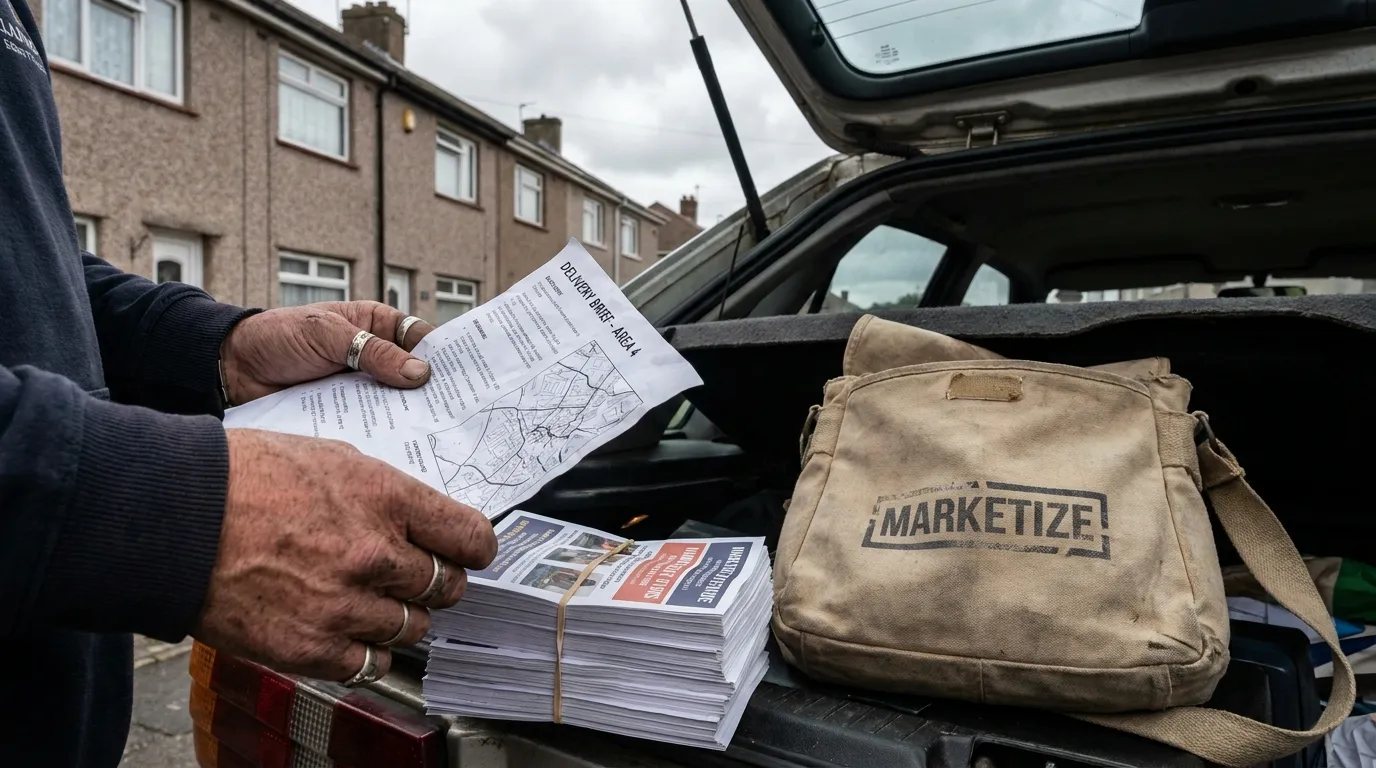
A brief looks simple. It tells you how many leaflets need distributing, where, and by when. Most new distributors glance at those three pieces of information, check the rate, and say yes or no based on whether the area seems manageable and the money looks acceptable.
That's not enough. The same brief can represent a comfortable day's work or an extremely demanding one depending on details that aren't always spelled out. A brief that says "5,000 leaflets, South Ipswich, Friday" doesn't tell you how long the day will actually take, how physically demanding it will be, or whether the rate covers the work properly. Reading a brief well means extracting all of that information - from what's written, and sometimes by asking about what isn't.
Quantity: What the Number Actually Means
The quantity figure tells you how many letterboxes need to be reached. It doesn't tell you how long that will take. That depends entirely on the area.
In dense urban streets where properties are closely packed and letterboxes are accessible at the front door, an experienced distributor working efficiently might reach 800 to 1,000 letterboxes in a full day. In standard suburban streets with modest front gardens, the range drops to 600 to 800. In lower-density areas, villages, or anywhere with longer walks between properties, 400 to 600 is more realistic. Rural areas can produce 200 to 400 or fewer, depending on how spread out the housing is.
Run the calculation before you accept. If the brief lists 3,000 leaflets and you'll be covering suburban housing, that's roughly four to five hours of active distribution. If it's 3,000 leaflets in a low-density area with longer stretches between properties, it may take your entire day. Same number, very different jobs.
You also need to account for the weight. A thousand standard A5 leaflets at typical paper weight might weigh around one kilogram. Five thousand is five kilograms of leaflets alone, not counting your bag, water, and anything else you're carrying. Large format leaflets or heavy card stock increase this further. Over a six-hour shift, carrying more weight than you planned for becomes a significant physical issue.
If the quantity seems unusually high for a single day - or the brief doesn't specify whether it's expected to be completed in one shift - ask. Understanding the typical scale a campaign requires helps you assess whether the quantity makes sense for the area and the timeline. Some clients expect everything done at once. Others are happy for work to be spread across two or three days within a deadline window. Knowing which applies changes your planning entirely.
Area: Reading the Geography Before You Commit
The area section of a brief is where most distributors under-investigate. "South Ipswich" or "postcodes IP3–IP4" tells you the location. It doesn't tell you what the streets are like.
Before accepting, look at the area properly. Pull up Google Maps or Street View and spend five to ten minutes actually looking at the streets. Different area types produce markedly different delivery rates - and what looks like a manageable patch on a postcode map can include very different street conditions depending on housing density, driveway lengths, and access complications.
You're assessing several things. The first is housing density - how closely packed are the properties? Are they terraces with direct letterbox access, or detached houses with long driveways? Dense, accessible housing means faster progress. Dispersed housing with long approach paths means slower progress per hour.
The second is the likely presence of flat blocks and communal entries. Areas with a high proportion of purpose-built flats, converted houses with multiple units, or gated developments will have more non-deliverable properties and more access complications. A building with a broken entry system and no accessible communal letterbox can't be delivered to. Across most areas, around five percent of properties are genuinely undeliverable for reasons like this, plus "No Junk Mail" signs. In some urban areas with high flat density, the proportion is higher. This affects your effective delivery count.
The third is topography. Significant hills are a real factor over a long leaflet distribution shift. A relatively small area that looks manageable on a map can become significantly harder if it involves repeated steep climbs throughout the day.
The fourth is access and transport. How do you get to the area? How long does it take? Is there parking if you're driving with a reload point? If you're on public transport, is the route practical? Using a proper area selection method - rather than eyeballing postcodes - turns these into concrete answers before you commit.
Deadline: What It Means for Your Planning
Most briefs include a completion deadline. What matters is how that deadline intersects with the quantity and your availability.
If 5,000 leaflets need to be distributed by Friday and today is Monday, you have four days to plan across, assuming you can work on more than one of them. If the same 5,000 leaflets need to be done by tomorrow and you're only available for one shift, the maths needs to work in a single day. Check the calculation before accepting.
Also check whether the deadline is firm. If the campaign is tied to an event, a product launch, or a specific date when the client needs households to have already received the material, missing the deadline has real consequences for the client. Understanding how timing decisions affect campaign outcomes is a useful frame for this: you're not just managing your own schedule, you're working within a client's campaign logic.
Some campaigns have windows rather than hard end dates - deliver any time between Tuesday and Thursday, for example. This can be useful if weather changes your plans or something comes up during the week. Others need delivery on a specific day. Consultation distribution for planning applications often has a fixed consultation period, which means late delivery misses the window entirely and renders the work ineffective. Know which category your job falls into.
A deadline that's very tight relative to the quantity should prompt a direct conversation before you accept. Saying yes and then missing the deadline because the maths didn't work is significantly worse - professionally and financially - than raising the concern beforehand.
Property Mix: The Detail That Changes Everything
Property mix is the most underestimated variable in a brief. The area type summary tells you the location. The property mix tells you what the work will actually feel like.
Terraced Housing
Terraced houses with direct letterbox access at the front door are the most efficient delivery environment. Short approach, direct posting, quick movement between properties. If the brief covers a dense area of Victorian terraces, you're in the most favourable leaflet distribution conditions available.
Semi-Detached and Detached Housing
This is the standard residential mix across most UK towns. Front gardens typically add five to twenty metres of approach walking per property. Letterboxes are almost always accessible at the front door. At scale, the additional approach distance per property adds meaningful time to the day compared to terraced distribution - but it's manageable and familiar.
Detached Housing With Long Driveways
This slows things down noticeably. A property requiring a sixty-metre walk up a driveway and back is taking three to four times the time of a terraced front door. Across dozens of such properties in an afternoon, this compounds. Low-density areas with large detached homes are among the slowest distribution environments per hour - the per-thousand rate doesn't automatically account for this, which is why the area assessment matters before you accept.
Flat Blocks and Managed Buildings
Flat blocks introduce access variables that can significantly affect your delivery rate and your non-delivery count. Some blocks have accessible communal letter rooms. Others require an entry system that may or may not be answered. Some have a concierge. Some are fully gated with no visible intercom.
In consultation distribution - for planning applications and civic notices - every property in the notification zone must be attempted before it can be recorded as non-deliverable, which means intercoms should be tried and managing agent signs noted. In standard commercial distribution, the approach to inaccessible flat blocks is different: if you can't access the building through a public or communal entry, record the address as non-deliverable and move on.
Knowing in advance what proportion of the area is flat-heavy helps you estimate your non-delivery rate and your actual delivery count, which affects your earnings calculation.
Mixed Urban with High Commercial Density
Some briefs cover areas that are predominantly residential but include significant commercial sections - high streets, industrial estates, retail parks. Commercial properties generally receive leaflets only if the brief specifically includes them. If it doesn't, a large commercial section within your coverage boundary is effectively undeliverable and reduces your working letterbox count. Check whether commercial properties are in or out of scope for the campaign.
Putting It All Together Before You Accept
A well-read brief gives you enough information to answer four questions with confidence.
First: can you physically complete this job in the time available? Running the quantity through a realistic capacity estimate for the area type tells you whether it's a comfortable day, a long day, or a day that will likely overrun.
Second: does the rate reflect the work? The article on how distributor pricing works covers this in detail, but the short version is to calculate what the per-thousand rate produces in day earnings given your realistic delivery speed. If that figure doesn't reflect the physical effort involved, you have two options: negotiate, or decline. Understanding what leaflet distribution actually costs from the client's side gives you a useful frame for whether the rate you're being offered is competitive or undercooked.
Third: do the logistics work? Journey to collection, collection to area, the delivery itself, return journey. Time and cost for all of it, based on what you actually know about the area - not what you assume.
Fourth: is anything about this brief unclear enough to create a problem if you don't resolve it before accepting? If yes, ask. If the client can't or won't answer clearly, that's information too.
A brief that you can read thoroughly and answer those four questions from is one you can accept with genuine confidence. Platforms like Marketize provide letterbox counting tools and map drawing capabilities that help you plan coverage areas before you commit, and GPS-tracked delivery ensures your completed work is properly verified. Taking ten minutes to use those tools before accepting is the same discipline as reading the brief carefully - it turns an estimate into a plan.
After completing a job, reviewing the completion report is how you confirm that your planning matched reality - and what to adjust next time. Reading briefs carefully, as with every other professional habit, is part of what separates good distributors from great ones. This article is part of the Before You Say Yes series on assessing a leaflet job.