28 April 2026 · 16 min read
How to Combine Leaflets with Digital Marketing: Integration Strategies That Amplify Both Channels
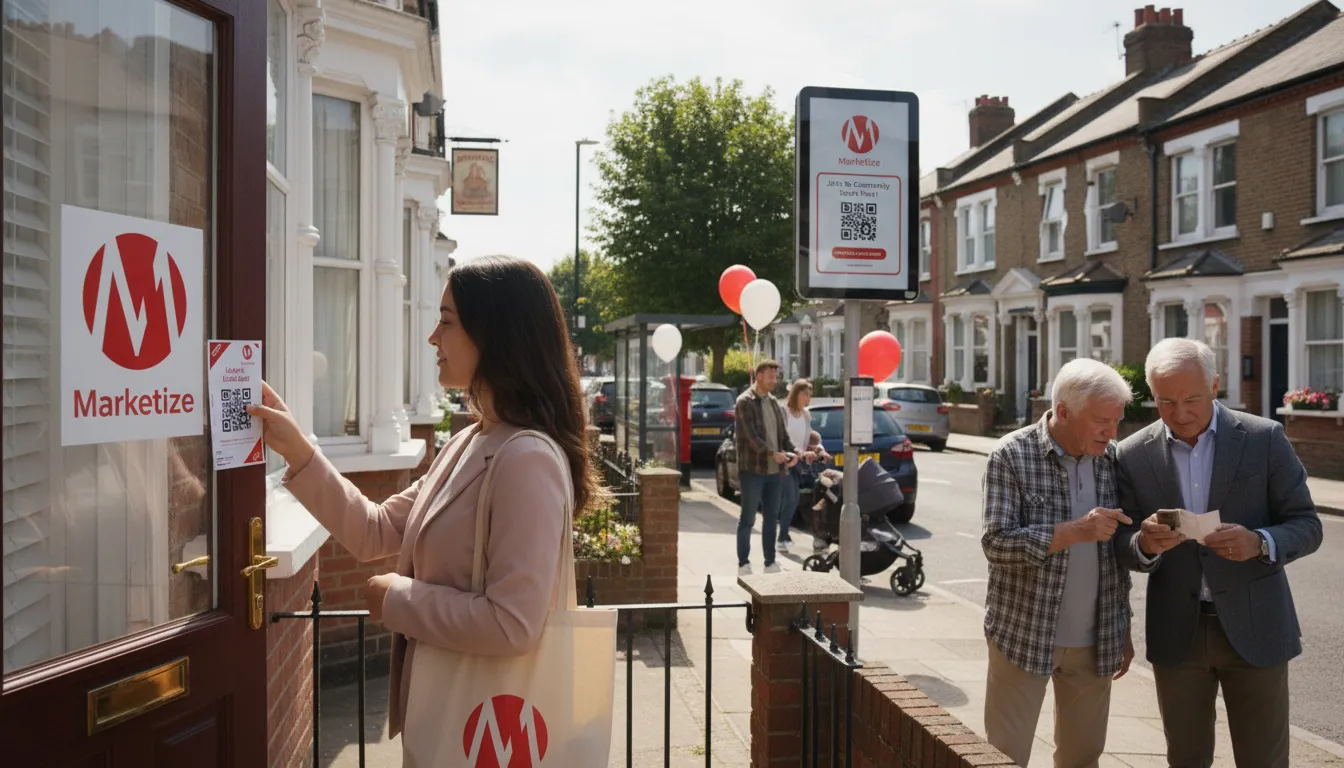
Most businesses treat leaflet distribution and digital marketing as separate, disconnected channels. Run Facebook ads in March. Distribute leaflets in May. Post on Instagram in July. Each campaign operates independently with its own budget, timeline, and tracking.
The problem? You're leaving massive value on the table.
Someone sees your Facebook ad. Scrolls past. Two days later, your leaflet drop arrives through their door. Suddenly your business isn't just another ad in the feed — it's a local company they've seen multiple times. Recognition builds. Trust increases. They're far more likely to act.
Or reverse the sequence: your leaflet arrives Monday with a QR code. They scan it, land on your website, browse but don't convert. Wednesday, they see your Facebook retargeting ad showing the exact offer from the leaflet. The combined exposure — physical and digital — creates far higher conversion than either channel alone.
How to combine leaflets with digital marketing isn't about running campaigns simultaneously by coincidence. It's deliberate integration where each channel reinforces the other, creating attribution loops, retargeting opportunities, and multiplied brand exposure that transforms both channels from decent performers into powerful conversion drivers. This sits within the broader campaign strategy and planning framework — where timing, frequency, area selection, and channel integration all work together rather than as isolated decisions.
Here's how to integrate leaflets with digital marketing strategically instead of hoping they accidentally complement each other.
Why Integration Works Better Than Isolation
Running leaflets and digital separately means each campaign starts from zero awareness. Integration compounds recognition across touchpoints.
The Multi-Touch Attribution Reality
Modern consumers rarely convert on first exposure. They need 3–7 touchpoints with your brand before taking action. If all those touchpoints come from the same channel (seven Facebook ads), you're fighting algorithm fatigue and ad blindness.
Vary the channels — leaflet drop, Facebook ad, Google search result, Instagram post, another leaflet — and each exposure feels fresh rather than repetitive. The variety sustains attention while building cumulative recognition.
Trust Through Presence
Digital-only businesses can feel ephemeral. A Facebook ad could be anyone, anywhere. A physical leaflet arriving at someone's home signals investment and local presence. You spent money to reach their specific area — you're not just another dropshipper running ads from abroad.
Combine that physical credibility with digital convenience (click this link, scan this code) and you get trust plus ease of action. This is one of the strongest arguments for door to door leaflet distribution in an age of digital-first marketing — no digital channel delivers the physical proof of local presence that a letterbox drop does.
Cost Efficiency Through Retargeting
Leaflet distribution reaches households once. Digital retargeting keeps you visible to people who showed interest, at fraction-of-a-penny costs compared to the initial leaflet delivery service spend.
Someone scans your QR code but doesn't book? Retarget them on Facebook for the next two weeks. The leaflet created the awareness. Digital retargeting closes the conversion. Total cost: leaflet distribution plus minimal retargeting spend. Far cheaper than either channel trying to do the full job alone.
QR Codes: The Bridge Between Physical and Digital
Link to campaign-specific landing pages, not your homepage. Someone scanning from a leaflet promoting your gym's January offer should land on a page about that offer — not your generic homepage where they'll hunt for relevant info and probably leave. Platforms like Marketize make coordinating leaflet distribution timing with landing page readiness easier — you ensure pages are live before leaflets arrive.
Make the destination worth the scan. QR codes that just show your standard website disappoint. Offer something valuable: exclusive discounts, video content, instant booking, downloadable guides. The scan needs to deliver immediate payoff.
Visual prominence matters. Don't hide QR codes in small print. Make them prominent with clear instructions: "Scan for 20% off" or "Scan to book instantly." People need to know what happens when they scan.
Tracking and Attribution
QR codes provide precise data on physical-to-digital conversion. You know exactly how many people scanned from your flyer distribution campaign, which areas generated most scans (if using area-specific codes), and what they did after landing.
Use unique QR codes for different distribution areas. Code A for affluent suburbs, Code B for student areas. Track which areas drive highest engagement and adjust future targeting accordingly. This pairs directly with how to choose leaflet distribution areas — demographic targeting decisions upstream determine which area codes are worth splitting and comparing.
This attribution transforms leaflet distribution from "we distributed 10,000 leaflets and inquiries increased" to "we distributed 10,000 leaflets, 847 people scanned QR codes, 312 visited service pages, 89 booked — 7.9% scan-to-conversion rate from Area A versus 3.2% from Area B."
Landing Pages: Where Leaflets Send People
Generic websites don't convert leaflet traffic well. Campaign-specific landing pages do.
What Makes Leaflet Landing Pages Work
Message match: If your leaflet promotes "New Members Get First Month Free," the landing page headline should say exactly that — not "Welcome to Our Gym" or "Membership Options." Visual consistency matters too. Use the same imagery, colours, and offer prominence.
Mobile optimisation: Most QR scans happen on phones. If your landing page isn't mobile-optimised, you're losing conversions immediately. Fast load times, large tap targets, minimal typing required.
Single clear action: Leaflet landing pages should drive one primary action — book now, claim offer, download guide. Don't distract with navigation menus, blog links, or multiple competing calls-to-action.
Tracking pixels installed: This is where integration gets powerful. Install Facebook Pixel, Google Analytics, and any other retargeting pixels on leaflet landing pages. Everyone who scans your QR code now enters your retargeting audiences automatically.
Dynamic Content for Multiple Campaigns
If you're running regular monthly leaflet distribution to different areas, consider landing pages with dynamic content based on QR code parameters. Same base page, different offer text or area-specific messaging depending on which code was scanned. This reduces the need to build entirely new pages for each campaign while maintaining message match and tracking by area.
Retargeting: Keeping Leaflet Respondents Engaged
The most powerful integration happens after the leaflet arrives.
Building Retargeting Audiences from Leaflet Traffic
Everyone who scans your QR code and lands on your campaign page gets added to custom retargeting audiences. Now you can show them ads on Facebook, Instagram, and Google for days or weeks after their initial door to door leaflet distribution exposure.
Example workflow:
- Monday: Leaflets arrive in 5,000 homes
- Monday–Wednesday: 600 people scan QR codes, land on offer page
- Wednesday onward: Those 600 people see Facebook ads reminding them of the offer, showing testimonials, creating urgency
The leaflet created awareness and interest. Retargeting nurtures that interest into conversion.
Retargeting Strategy by Response Type
- Scanners who didn't convert: Show ads reinforcing the offer, adding social proof, addressing common objections. "Still thinking about joining? Here's what members say..."
- Scanners who partially converted (filled form but didn't book): More aggressive retargeting with urgency. "Complete your booking — offer ends Friday."
- Non-scanners in distribution areas: You can also retarget by postcode. Even people who didn't scan might remember seeing your leaflet. When they see your ad a few days later, recognition triggers: "Oh yeah, I saw their leaflet." Combined exposure increases conversion beyond either channel alone.
Budget Allocation
Retargeting audiences from leaflet campaigns tend to be highly engaged and convert at better rates than cold audiences. Allocate retargeting budget proportionally — if 600 people engaged with your leaflet campaign, spending £200–400 retargeting them over two weeks often generates better ROI than that same budget on cold prospecting.
Social Media Integration
Leaflets can drive social media growth, and social media can amplify leaflet impact.
Driving Followers from Leaflets
Include social media handles on leaflets with specific reasons to follow: "Follow us on Instagram for weekly menu updates" or "Join our Facebook group for member-only workouts." QR codes can link directly to social profiles with pre-populated follow actions on platforms that support it.
Track follower growth around distribution dates. Coordinated flyer distribution to 10,000 homes should generate measurable social follower increases if the call-to-action is clear and compelling.
Using Social to Amplify Leaflet Campaigns
Post about your leaflet campaign on social media. "If you received our leaflet this week, we'd love to hear from you — comment below!" This creates conversation and reminds people who saw the leaflet but didn't act immediately.
Run social ads to the same areas where leaflets are distributing. The combined exposure — physical leaflet plus digital ad in the same week — builds recognition faster than either alone. The technology behind modern leaflet distribution now makes it straightforward to confirm exactly which households were reached and when, so your social targeting can mirror the same postcodes with confidence.
User-generated content works well here. Encourage people who received leaflets to post photos with your branded hashtag for a chance to win something. Creates social proof and extends campaign reach beyond the original distribution.
Email Marketing and List Building
Leaflets can grow email lists that become long-term marketing assets.
Leaflet-to-Email Conversion
Include email signup incentives on leaflets and landing pages: "Sign up for our newsletter and get an extra 10% off" or "Join our email list for weekly recipes." The leaflet drop drives initial traffic. The email capture creates an ongoing communication channel that costs nothing for future campaigns.
Track email signup rates from leaflet landing pages versus other sources. If leaflet traffic converts to email signups at 15% while general website traffic converts at 8%, that's quantifiable evidence of integration effectiveness.
Email Sequences for Leaflet Respondents
Someone scans your QR code, enters email, doesn't convert immediately? Trigger automated email sequences tailored to leaflet campaign offers.
- Email 1 (Day 1): Welcome, reinforce offer
- Email 2 (Day 3): Social proof, testimonials
- Email 3 (Day 5): Urgency, offer ending soon
- Email 4 (Day 7): Final reminder
This nurturing often converts people who needed time to decide but would have forgotten without follow-up.
Google Ads and Search Integration
Leaflet campaigns can be coordinated with paid search for mutual amplification.
Branded Search Lift
After leaflet distribution, monitor branded search volume. People who received your leaflet and want to learn more often Google your business name before visiting directly. Running branded Google Ads during and after distribution captures this search traffic when interest is highest. Conversion rates on branded search from recent leaflet recipients tend to be excellent because they're already familiar with your offer.
Local Service Ads
For service businesses, Local Service Ads (Google's pay-per-lead platform for verified local businesses) work exceptionally well coordinated with leaflet delivery service campaigns. The leaflet builds awareness in specific areas. Local Service Ads capture people actively searching for those services in the same areas.
Demographic targeting tools — like those Marketize provides for strategic area selection — help ensure your leaflet distribution areas align with your highest-performing Google Ads geographic segments.
Remarketing Lists for Search Ads (RLSA)
People who visited your leaflet landing page but didn't convert get added to RLSA audiences. When they later search for services like yours, your ads can show with adjusted bids or special messaging referencing the leaflet offer they saw. This closes the loop: physical leaflet drives initial awareness, they don't convert, later they search actively for the service, your ad reminds them of the offer — conversion follows.
Attribution and Measurement
Integration only works if you can measure what's working. Understanding how leaflet distribution works end-to-end — including what verified completion data looks like — gives you the distribution-side baseline that makes multi-channel attribution meaningful.
Multi-Touch Attribution Models
Single-touch attribution (crediting only the last click before conversion) massively undervalues leaflets. Someone might see your leaflet Monday, scan the QR code but not convert, see your Facebook retargeting ad Wednesday, Google your business Thursday, and book Friday. Last-click attribution credits Google. Reality: the leaflet started the journey.
Use multi-touch attribution models that assign fractional credit across touchpoints. Tools like Google Analytics with proper UTM tracking on QR code links allow this.
Channel-Specific Tracking Codes
Beyond QR codes, use unique promo codes for leaflet campaigns versus digital campaigns. "Use code LEAFLET20 for discount" on physical leaflets, "Use code SOCIAL20" on social media. When someone uses LEAFLET20, you know with certainty that the flyer distribution drove the conversion — even if they entered it via your website rather than scanning a QR code.
Track redemptions by channel. If 89 people used LEAFLET20 and 34 used SOCIAL20, you have clear data on relative channel performance.
Measuring Lift
Run controlled tests where possible. Distribute leaflets to Area A but not Area B (similar demographics). Run identical digital ads to both areas. Measure conversion rate difference.
If Area A (leaflets + digital) converts at 4.2% and Area B (digital only) converts at 2.7%, the 1.5 percentage point lift quantifies integration value. This testing shows whether combining channels genuinely performs better or if you're just running two expensive campaigns that happen to overlap.
Timing Coordination
Integration requires deliberate timing, not accidental overlap. For a full breakdown of when to distribute by season, industry cycle, and day of week — and how those timing decisions interact with digital campaign windows — timing strategies for leaflet delivery covers the complete framework.
Sequencing Strategies
- Leaflet first, digital follow-up: Distribute leaflets Monday–Wednesday, launch retargeting ads Thursday, maintain ads for 2–3 weeks. Leaflets create awareness, digital nurtures it.
- Digital awareness, leaflet conversion: Run Facebook ads for two weeks building awareness, then distribute leaflets with specific offer to areas showing highest ad engagement. Digital warms the market, leaflets drive action.
- Simultaneous bombardment: Leaflets arrive same week as social ads, Google Ads, and email campaign — all promoting identical offer with consistent messaging. Maximum exposure in short window creates urgency.
No single sequence is universally best. Test different approaches and measure which timing generates highest combined ROI for your specific business and offer.
Campaign Calendars
Plan 3–6 months ahead showing when leaflets distribute, when digital campaigns launch, when retargeting periods run, and when offers expire. This prevents accidental conflicts — such as a leaflet promoting a January offer arriving after it's expired because the digital campaign launched early — and ensures all channels align around the same strategic goals.
Scheduling tools and campaign dashboards on platforms like Marketize make this planning easier. And once you know your timing, you need accurate quantities for each distribution window — letterbox counting tools ensure you order the right number of leaflets for each area in your schedule without waste.
Budget Allocation Between Channels
How should you split budget between leaflets and digital when running integrated campaigns? Understanding the underlying leaflet distribution costs for your area type and campaign size is the starting point — you can't plan channel ratios without knowing what each distribution run actually costs.
Starting Ratios
For businesses new to integration, a common starting point is 60% leaflet distribution, 40% digital support (landing pages, retargeting, social ads). Leaflets do the heavy lifting of reaching new households. Digital provides the follow-up and conversion nurturing at lower incremental cost.
As you gather attribution data, adjust ratios based on what's working. If retargeting consistently delivers 8:1 ROI while initial leaflets show 3:1, shift budget toward retargeting incrementally.
Cost Per Acquisition (CPA) Tracking
Calculate true CPA across both channels combined, not separately.
Example:
- Leaflet distribution: £1,200
- Landing page development: £300
- Retargeting ads: £400
- Social media ads: £200
- Total: £2,100
Campaign generates 63 new customers. Combined CPA: £33.33.
This matters because if you calculate leaflets alone (£1,200 ÷ 30 direct conversions = £40 CPA) versus retargeting alone (£400 ÷ 33 conversions = £12.12 CPA), you might wrongly conclude leaflets underperform. Reality: leaflets drove the initial awareness that made retargeting possible. They work together.
Incremental Testing
Don't overhaul your entire marketing strategy overnight. Test integration with one campaign first. Run your normal leaflet distribution to 5,000 homes, but this time add QR codes, build a dedicated landing page, and run two weeks of retargeting to scanners. Measure results against previous leaflet-only campaigns.
If integration delivers 30–50% better results (common when done properly), expand the approach to future campaigns. Before scaling, make sure you have the verification layer in place — GPS proof of delivery confirms each integrated campaign drop was completed as specified, so your attribution data is based on actual distribution, not assumed coverage.
Practical Implementation Checklist
When planning your next integrated campaign:
Pre-Distribution
- Build campaign-specific landing page with offer matching leaflet
- Install tracking pixels (Facebook, Google) on landing page
- Generate unique QR code linking to landing page
- Create unique promo code for leaflet redemptions
- Set up retargeting audiences based on landing page visitors
- Schedule digital ads to launch during/after distribution week
During Distribution
- Monitor QR code scans and landing page traffic
- Watch for branded search volume increases
- Track social media follower growth
- Note email signup rates from leaflet traffic
Post-Distribution
- Launch retargeting ads to landing page visitors
- Send email sequences to those who captured email but didn't convert
- Adjust digital ad spend based on early attribution data
- Continue monitoring conversions for 3–4 weeks (full response window)
Measurement
- Calculate total campaign cost (leaflets + digital)
- Track conversions by source (QR codes, promo codes, direct traffic, paid ads)
- Determine combined CPA and ROI
- Document learnings for next campaign
Integration Transforms Both Channels
How to combine leaflets with digital marketing transforms both channels from independent efforts into a coordinated system where physical presence builds trust and awareness while digital provides targeting, retargeting, and conversion nurturing at scale.
QR codes bridge the gap, landing pages convert the traffic, retargeting maintains visibility, and multi-touch attribution shows the true value of integration rather than crediting only the last click. And because leaflet delivery service platforms now provide GPS verification, letterbox counting, and scheduling tools, the distribution side of the equation is as measurable and accountable as the digital side.
For guidance on leaflet distribution frequency — how often to distribute to sustain the awareness that makes digital integration effective — and how leaflet distribution in 2026 fits within the broader marketing mix, Marketize's website offers resources built from decades of industry experience.
Ready to plan your first integrated campaign? The Marketize campaigns dashboard lets you plan, schedule, and verify distribution — with letterbox counting, demographic targeting, and GPS-verified completion all in one place. Or if you want to understand the full planning process before starting, how to plan a successful leaflet campaign covers every decision from objectives and quantities through to timing and verification.
On the distributor side, whether you're exploring leaflet distribution jobs near you, student leaflet distribution jobs in 2026, or leaflet distribution jobs for over 60s — Marketize connects you with clients running exactly these kinds of strategically integrated, GPS-verified campaigns.