21 September 2026 · 10 min read
How to Ensure Full Coverage for Civic Leaflet Communications
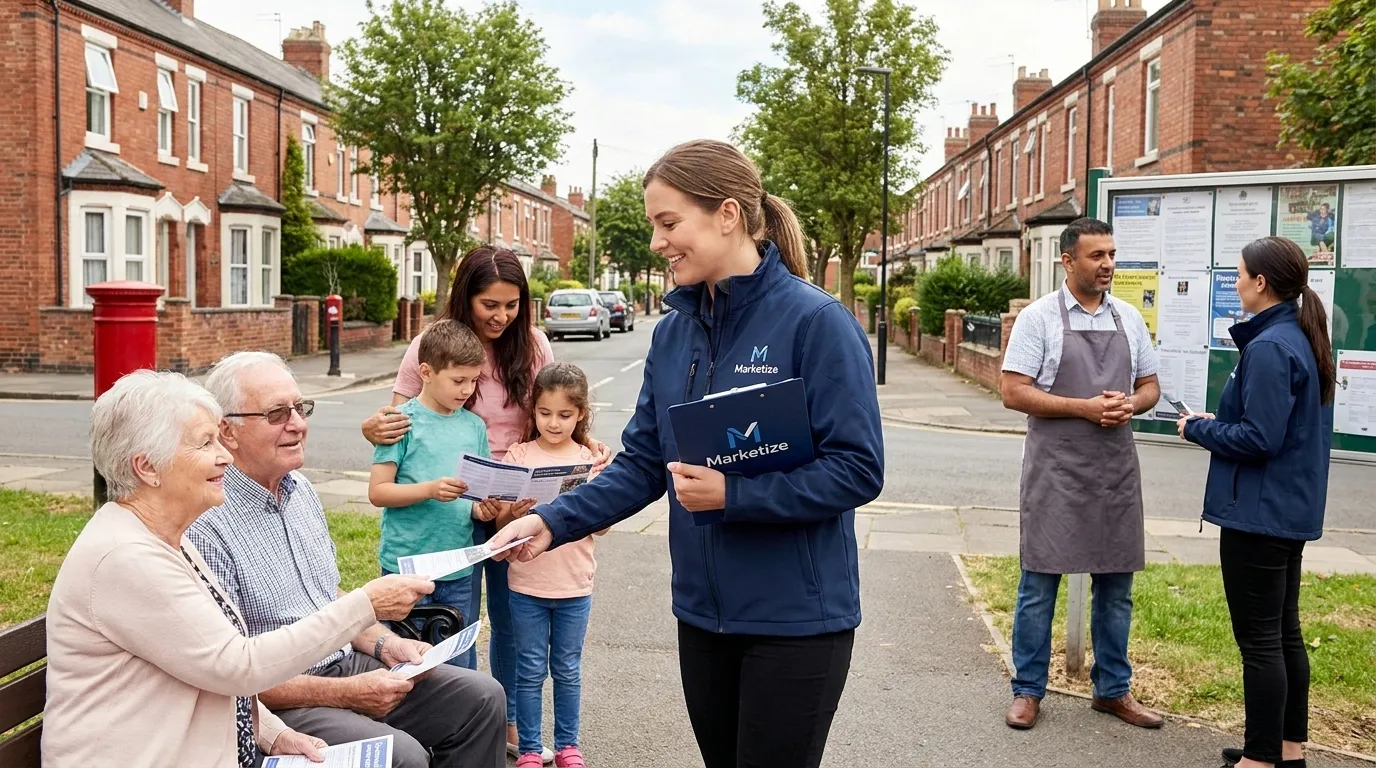
Civic communications require complete coverage. Not most properties. Not a high percentage. Every deliverable address within the specified area, verified with evidence that can withstand scrutiny from residents, planning authorities, and objectors alike.
This requirement distinguishes civic leaflet distribution from commercial campaigns. When a retailer misses 5% of addresses, they lose potential customers. When a planning authority or developer misses 5% of addresses, they face valid objections, potential legal challenges, and the possibility of having to restart the entire consultation process.
The five articles in this consultation series have covered the full picture: what consultation distribution is and when it's required, the legal and procedural requirements for planning applications, how to document non-deliveries correctly, how consultation distribution differs from standard door drops, and the consultation and civic distribution pillar overview. This final article addresses the practical question: how do you actually ensure full coverage when the stakes are this high?
Why 'Best Efforts' Isn't Good Enough for Civic Communications
Commercial leaflet distribution operates on a 95% delivery standard - roughly a 5% allowance for undeliverable properties ("No Junk Mail" signs, broken entry systems, genuinely inaccessible locations). This is industry-standard and appropriate for marketing campaigns.
Civic and consultation leaflet distribution operates differently. The 5% allowance still applies for genuinely undeliverable addresses, but 'best efforts' must be documented and evidenced. Every undelivered address needs a specific, defensible reason - not a general estimate.
Planning inspectors and legal advisers reviewing consultation compliance will ask: 'Did every affected resident receive notice?' The answer needs to be 'yes, and here is the evidence for every address, including documented reasons for any that couldn't receive physical delivery.'
This changes how you approach every stage of the distribution: planning, execution, documentation, and reporting.
Pre-Distribution Planning: Setting the Right Foundation
Define the Catchment Area Precisely
Civic distribution starts with a precisely defined catchment area, not a rough approximation. For planning applications, this is typically properties within a specified radius of the development site, defined by the local planning authority's requirements.
Vague boundaries create gaps. If your instructions say 'properties within 400 metres of the site boundary,' that needs to translate into a specific address list, not an approximate geographic area that distributors interpret individually.
Use letterbox count verification tools to generate the precise number of deliverable addresses within your boundary before distribution starts. This gives you the target number against which completion will be measured.
Identify Known Access Challenges in Advance
Review the distribution area before the campaign for properties likely to create access challenges: gated developments with entry systems, high-density residential towers with managed access, properties with 'No Junk Mail' signs visible on previous visits, roads temporarily closed for construction.
Document these challenges before distribution starts. Pre-identified access challenges are easier to plan around and document than surprises encountered during distribution.
For gated developments and managed buildings, identify the managing agent or residents' association in advance. Written permission to access for consultation purposes resolves the issue entirely. Without access, those addresses need formal documentation explaining why physical delivery wasn't possible.
Use Proper Distribution Planning Tools
Route planning for civic distribution should use leaflet distribution planning tools that map coverage by street and postcode rather than vague geographic areas.
Break large catchment areas into manageable segments with clear ownership. For multi-distributor campaigns covering large areas, each distributor should have a defined zone with no overlap or gaps between zones.
Overlap creates confusion about who was responsible for which addresses. Gaps create missed addresses that nobody notices until the evidence review reveals streets that weren't covered.
GPS Tracking: The Non-Negotiable Foundation
For civic distribution, GPS proof of delivery isn't optional. It's the primary evidence that distribution happened as planned.
GPS tracking must be active before the distributor leaves their starting point and remain active throughout the entire campaign. It should capture movement at intervals sufficient to show street-by-street coverage, not just a rough geographic trail.
The GPS proof of delivery record should show:
- Start and end times for the campaign
- Street-by-street coverage with timestamps
- Pace of delivery (consistent movement rather than gaps suggesting areas were skipped)
- Attempt visits to gated or difficult properties (even when access wasn't achieved)
- Total time on route matching realistic expectations for the quantity delivered
Offline GPS storage is essential. Areas with poor mobile signal should still generate complete trails. Systems that rely on continuous data connection create gaps whenever signal drops - gaps that look identical to areas that were genuinely skipped.
Platforms like Marketize's verified distribution network use GPS tracking with offline storage specifically because connectivity gaps must not appear as delivery gaps in civic documentation.
Photo Evidence: Visual Proof at Scale
GPS trails show where distributors went. Photo proof of leaflet delivery shows they were carrying and delivering leaflets throughout.
For civic distribution, photo requirements go beyond commercial standards. Frequency should be higher (every 300-500 leaflets rather than every 500-1,000), and photos should specifically include:
- Leaflet being posted into a letterbox (not just held near it)
- Visible house numbers or street signs for location identification
- Entry systems at gated properties where access was attempted but not achieved
- 'No Junk Mail' signs that made specific properties undeliverable
- Any road closures, building access restrictions, or other barriers to delivery
Geotagged timestamps embedded in photo metadata provide independent verification of when and where each photo was taken. Combined with GPS data showing movement through the area at consistent timestamps, this creates a multi-source evidence trail that's difficult to challenge.
The leaflet distribution verification documentation you submit to planning authorities or regulatory bodies should include a representative sample of delivery photos with their location and timestamp data visible.
Letterbox Count Cross-Referencing: The Mathematical Check
The final technical verification layer is letterbox count verification - cross-referencing GPS coverage against the known number of deliverable addresses on each street.
This catches the fraud pattern (and honest mistakes) that GPS alone misses: distributors who walk main roads but skip side streets, or who cover some streets in a zone but miss others that have similar addresses.
Royal Mail Postcode Address File data shows exactly how many deliverable addresses exist on every street in the UK. If your GPS trail shows coverage of streets containing 2,800 deliverable addresses but you claimed distribution to 3,500, the discrepancy is immediately visible.
For civic distribution, this verification is especially valuable because it provides the objective evidence that your submission covered the defined catchment area completely. 'Our GPS data shows we covered streets containing 4,947 deliverable addresses within the specified radius, representing full coverage of the 4,947 total addresses identified in our pre-campaign letterbox count' is a far stronger statement than 'we believe we covered the area.'
Handling Genuinely Undeliverable Addresses
Even with the most thorough distribution, some addresses will be genuinely undeliverable. The standard consultation undeliverable categories include:
- Properties displaying 'No Junk Mail' or 'No Circulars' signs
- Gated developments where access wasn't achievable despite attempts
- Properties with broken or missing letterboxes
- Addresses genuinely under construction with no residents present
- Properties where access creates genuine safety concerns (aggressive animals, access hazards)
Each undeliverable address should be logged individually. The log entry should include: the full address, the reason for non-delivery, the date and time of the attempt, and photographic evidence where relevant (the entry system, the 'No Junk Mail' sign, the construction site).
This documentation serves two purposes. First, it demonstrates genuine effort - you attempted delivery and have evidence of why it wasn't possible, rather than simply not attempting. Second, it allows you to calculate and evidence your actual delivery rate: 'We achieved delivery to 4,724 of 4,947 deliverable addresses. The 223 undelivered addresses represent properties with 'No Junk Mail' signage (187 properties) and gated developments where access wasn't obtained despite attempts (36 properties). Each is individually documented.'
For consultation purposes, non-delivery documentation should be retained for the duration of the consultation period and any subsequent appeal process.
Multi-Distributor Campaigns: Coordination and Coverage
Large catchment areas often require multiple distributors operating simultaneously or across several days. Managing multi-region campaigns without losing visibility applies equally to large civic distribution areas.
Zone Boundaries
Define zones with street-level precision, not approximate geographic areas. Every street must fall within exactly one zone. Zone boundaries should follow natural geographic features (railway lines, major roads, parks) where possible to reduce ambiguity.
Share zone maps with each distributor and require confirmation that they understand their zone boundaries before beginning.
Synchronised Verification
When multiple distributors are working across a large area, verification data from all of them needs to be aggregated into a single coverage picture. The combined GPS trails, photos, and letterbox counts from all distributors should show complete catchment coverage with no gaps between zones.
Campaign dashboards that show all distributor progress in real time allow supervisors to identify coverage gaps as they emerge rather than discovering them during the evidence review.
Consistent Documentation Standards
Every distributor on a civic campaign must follow identical documentation standards. Inconsistent evidence quality across zones creates questions about coverage quality in those zones.
Brief all distributors together before the campaign starts. Walk through exactly what documentation is required, what constitutes acceptable photo evidence, and how to log undeliverable addresses consistently.
Specialist Distribution vs General Services
Not every distribution service is equipped for civic documentation requirements. Full service leaflet distribution companies that primarily handle commercial campaigns may lack the systems needed for consultation-grade evidence.
The distinction between a national distribution company and a managed campaign service matters here. Managed services with experience in consultation distribution understand the documentation requirements, have appropriate GPS systems, and know how to structure evidence for planning submissions.
When evaluating distributors for civic work, ask specifically:
- Do you have experience with planning application consultation distribution?
- What GPS tracking system do you use, and does it have offline storage?
- How do you document undeliverable addresses individually?
- What format does your post-distribution evidence report take?
- Have you previously produced evidence for planning authority review?
Use Marketize to find verified distributors with consultation distribution experience, or review the postcode search tool to identify verified distributors operating in your catchment area.
Post-Distribution Evidence Compilation
After distribution is complete, compile a formal evidence package that can be submitted to the planning authority or included in your consultation documentation.
A complete civic distribution evidence package should include:
- Pre-campaign documentation: catchment area definition, address list with total count, route plan, distributor briefing record
- GPS coverage data: exported trail showing street-by-street coverage with timestamps, covering the entire catchment area
- Photo evidence: representative sample of delivery photos with geotag and timestamp data, spread across the catchment area
- Letterbox count verification: pre-campaign count vs. confirmed delivery count
- Undeliverable address log: individual records for each undelivered address with reason and photo evidence where relevant
- Summary statement: formal statement of delivery achievement - addresses targeted, addresses reached, undeliverable addresses documented
This package should be retained for the duration of any planning appeal period (typically six months from the planning decision, but check current requirements for your specific situation). Formal legal challenges to the adequacy of consultation notification can arise during this period.
The Cost of Getting It Wrong
Inadequate documentation of civic distribution isn't just a procedural inconvenience. It can invalidate the consultation process entirely.
If an objector successfully argues that affected residents weren't properly notified, the planning authority may be required to re-run the consultation with proper notification - at the developer's or council's expense. In contested planning applications, this can add months to the approval timeline and significant costs.
The cost of proper civic distribution - GPS tracking, photo verification, individual documentation of undeliverables - is trivial compared to the cost of re-running a consultation or facing a successful legal challenge to the process.
Proper public notice distribution with verified evidence isn't a premium service. It's the baseline for any distribution that needs to withstand scrutiny.